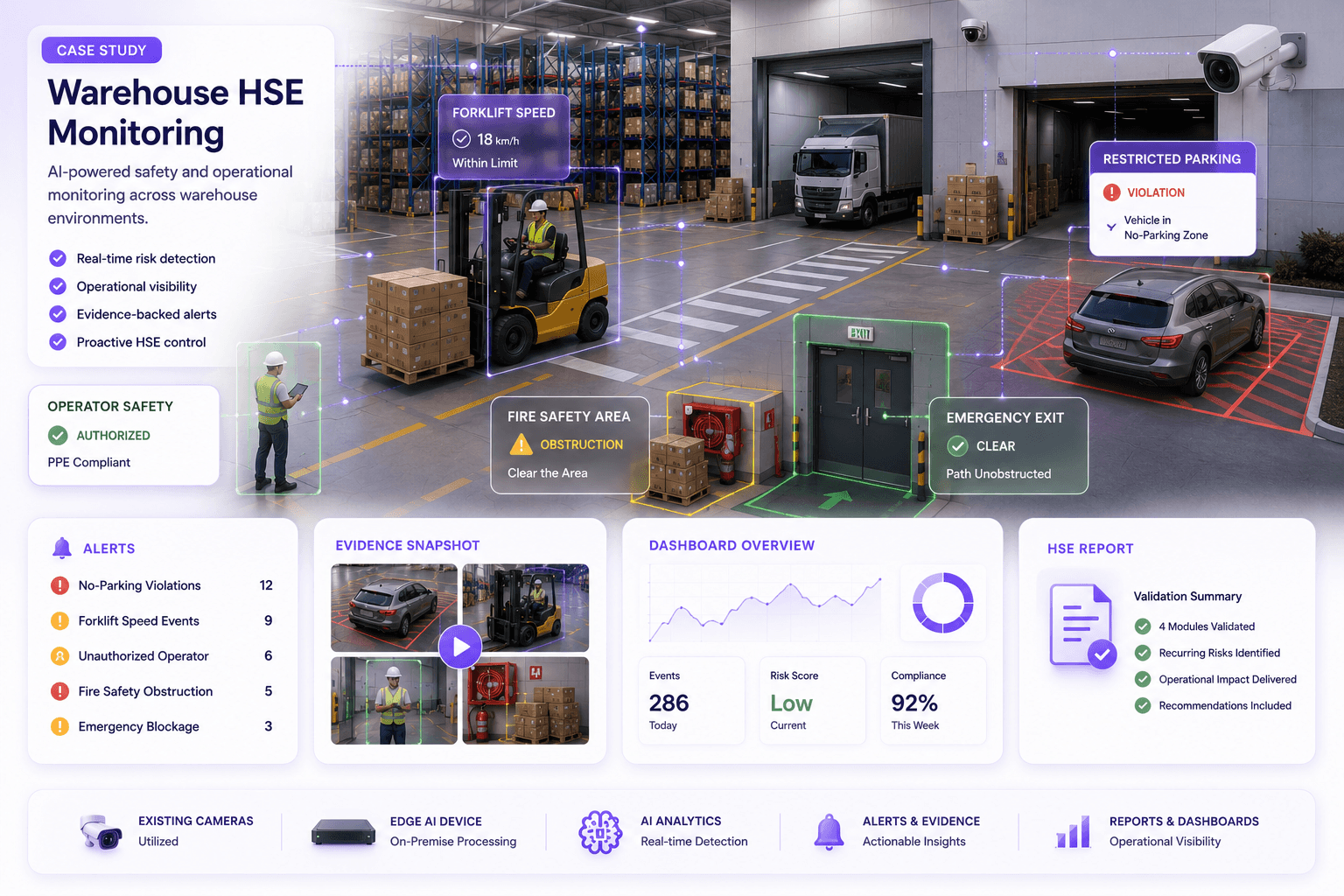
Warehouse Forklift Safety Monitoring Using Existing CCTV Cameras
Warehouse safety teams can use suitable existing CCTV cameras to detect forklift risk patterns, pedestrian proximity, unsafe zones and recurring behavior that traditional CCTV review often misses.
Executive summary
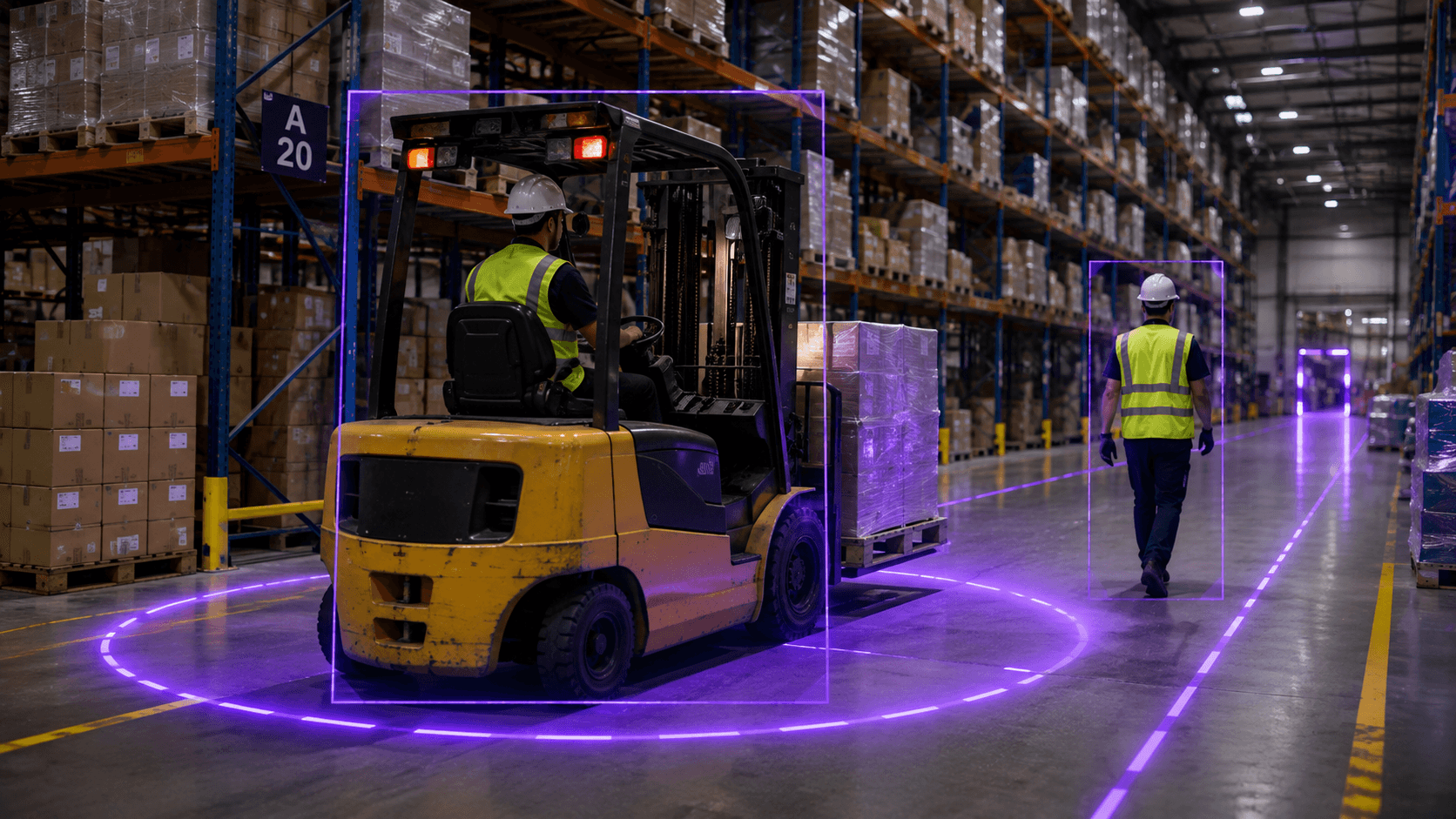
Forklift incidents are rarely caused by a single moment. They usually emerge from repeated behavior patterns: speeding at corners, blind-spot movement, pedestrians entering material-handling zones, poor separation between people and vehicles, blocked aisles and weak response after near misses. Traditional CCTV records these events but does not continuously interpret them.
Where AI adds value
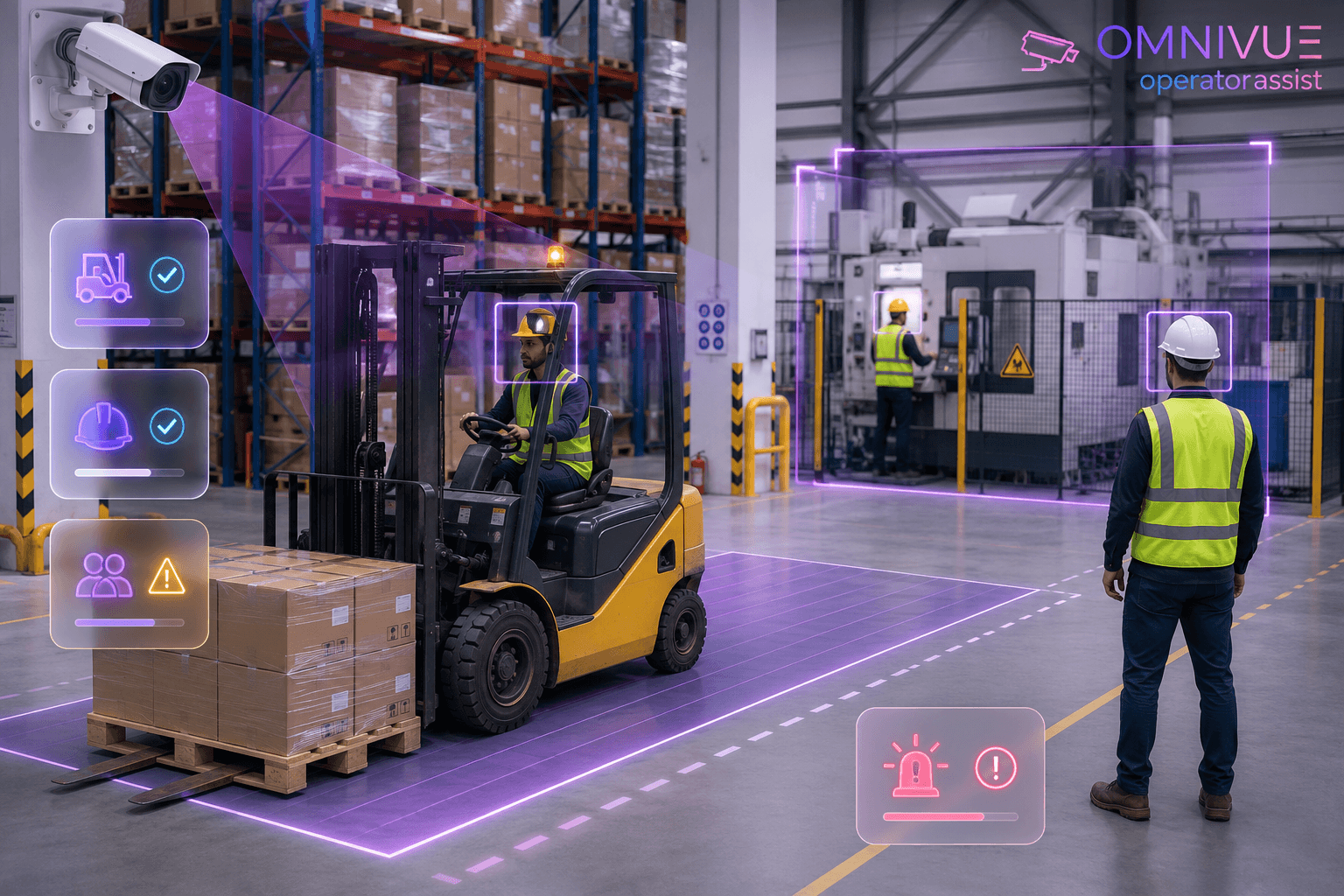
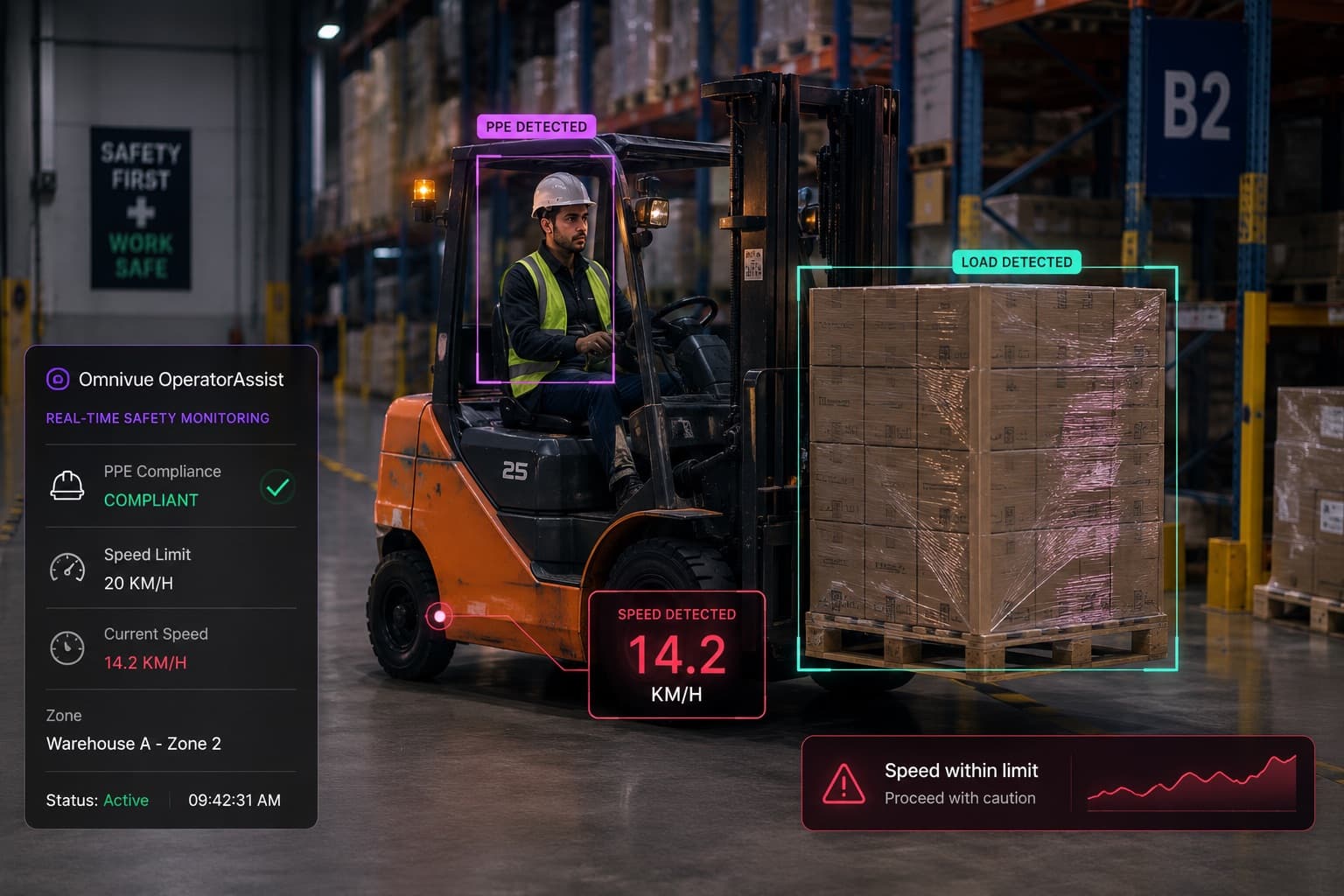
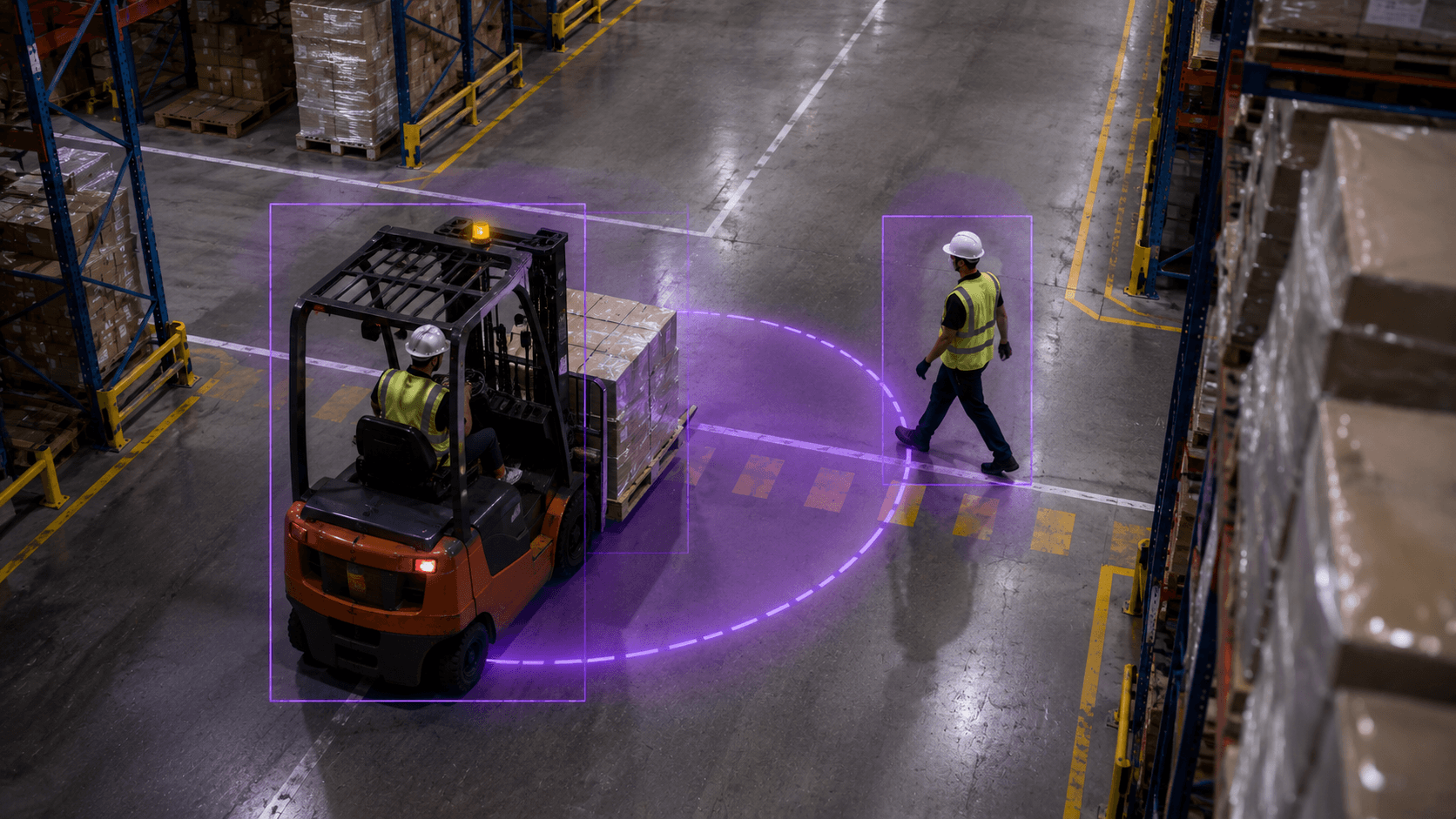
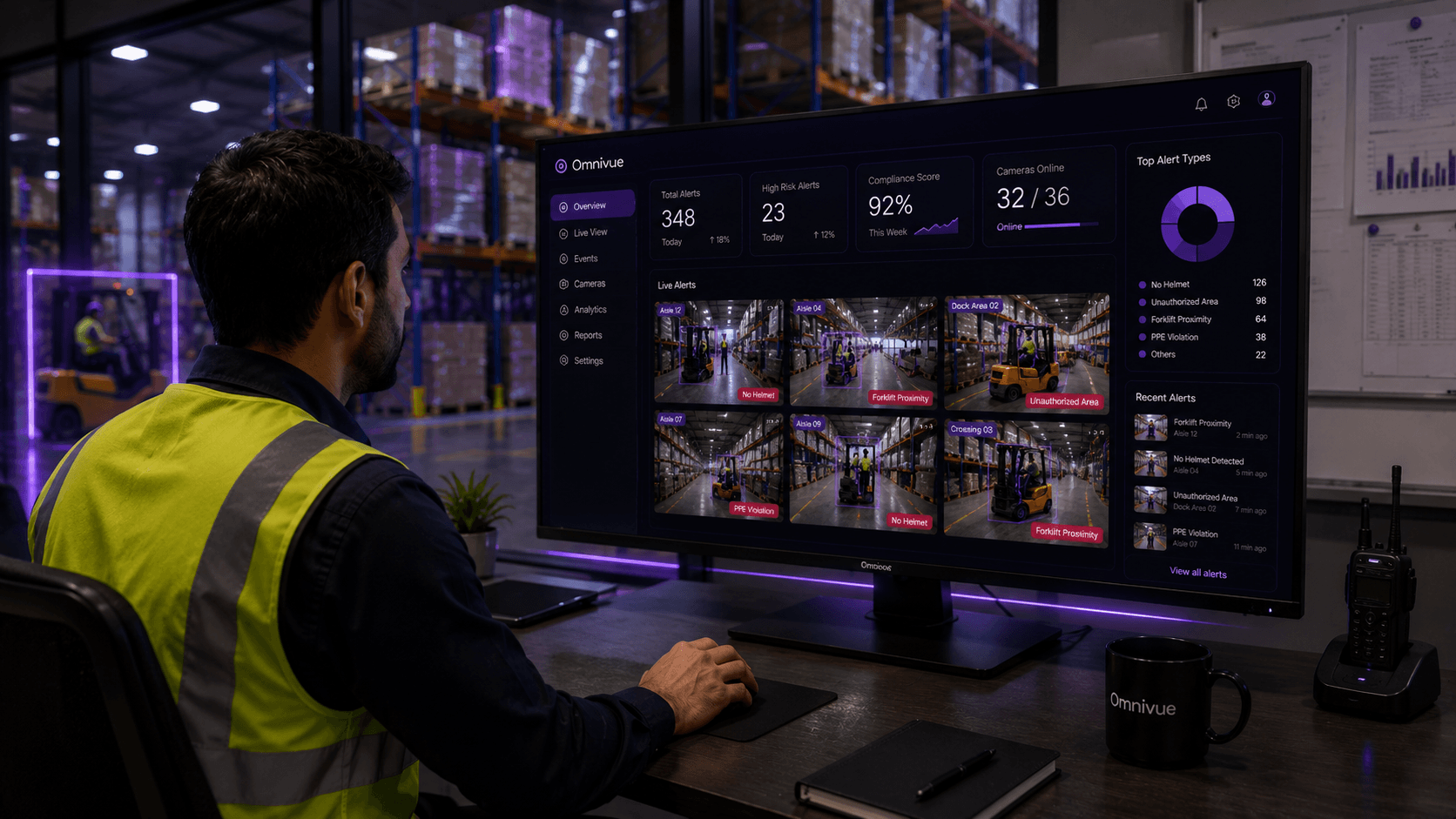
AI can help identify forklift presence, travel direction, zone entry, pedestrian proximity, restricted-area access, line-crossing events and repeated unsafe movement patterns. In some camera positions, it can also support speed-zone monitoring or behavior flags around intersections and dock doors. The value is strongest when alerts are connected to action.
Related Omnivue pages for this topic include Warehouse Yard Intelligence, HSE Safety Monitoring and OperatorAssist.
Best camera locations
High-value locations include aisle intersections, loading docks, pedestrian crossings, blind corners, ramp areas, charging zones, material staging areas and warehouse entrances where forklifts mix with people. The camera should capture the decision zone where unsafe behavior occurs, not just the aftermath.
What to measure
A pilot should measure event counts, alert precision, reviewable evidence, time-of-day patterns, hotspot locations, repeat behaviors and whether supervisors act on the alerts. Useful metrics include pedestrian-zone violations, proximity events, wrong-direction movement, speed-zone flags and event closure status.
| Decision area | What to check | Why it matters |
|---|---|---|
| Camera suitability | Angle, lighting, resolution and target size | Determines whether AI can see the operational event |
| Workflow ownership | Alert recipient, review process and closure | Prevents dashboards from becoming unused reports |
| Scale decision | Validated scenes, compute needs and support model | Turns a pilot into a controlled rollout |
Limitations
Warehouse environments are complex. Pallets, racks, moving equipment and poor lighting can create occlusion. Dust, glare, fast movement and camera vibration can reduce detection quality. Some workflows may need multiple views, improved lighting or supervisor verification.
Where Omnivue fits
Relevant Omnivue modules include OperatorAssist for operator behavior and activity monitoring, SafeGuard for safety compliance, SpeedGuard for speed-related workflows and Sentinel for restricted-area awareness. The Danube warehouse validation material should be linked as proof of practical warehouse relevance.
Warehouse safety workflow review
Evaluate Forklift Safety Monitoring for Your Warehouse
Omnivue helps warehouse and logistics teams assess existing camera coverage for forklift movement, pedestrian proximity, speed behavior and safety workflow automation.