
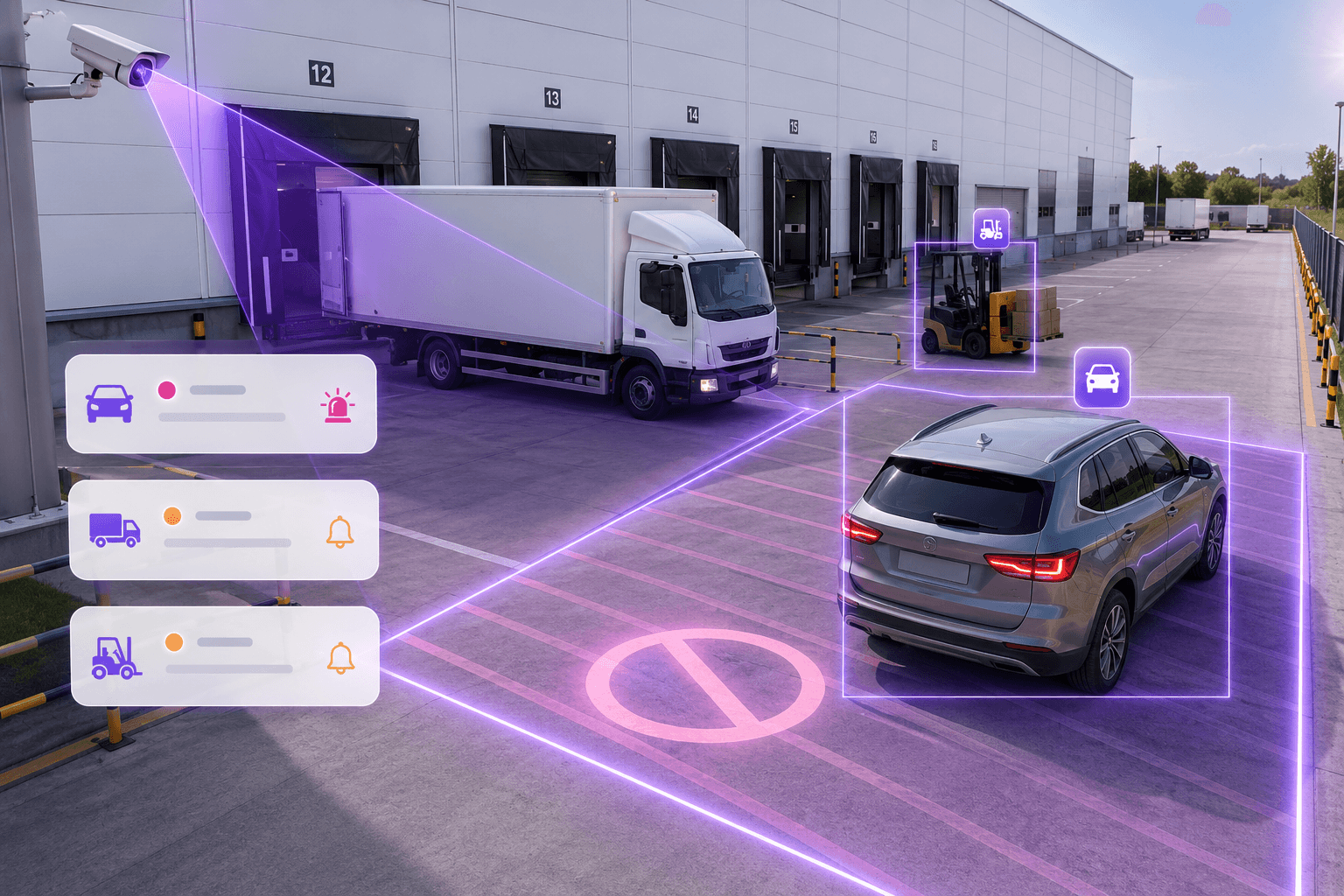
AI monitoring for no-parking and restricted vehicle zones.
ParkGuard helps operations and HSE teams detect vehicles parked in no-parking areas, restricted zones, loading paths and sensitive movement areas before they create congestion or safety risk.
Pilot validation note
Validated in a warehouse environment for restricted-zone and no-parking vehicle violations with documented visual evidence.
Zone
Monitored
Vehicle
Detected
Event
Logged
What ParkGuard manages
More than parking alerts. A control layer for vehicle discipline.
ParkGuard connects zone rules, vehicle detection, duration checks, alerts and incident evidence into one operational workflow.
No-parking Zone Monitoring
Monitor designated no-parking and restricted vehicle zones using existing camera coverage.
Duration-based Violations
Identify vehicles that remain inside restricted areas beyond the configured tolerance period.
Vehicle & Forklift Detection
Detect cars, trucks, forklifts and operational vehicles occupying sensitive movement areas.
Zone-based Rules
Define monitored zones around loading bays, warehouse walls, pathways and restricted boundaries.
Evidence-backed Alerts
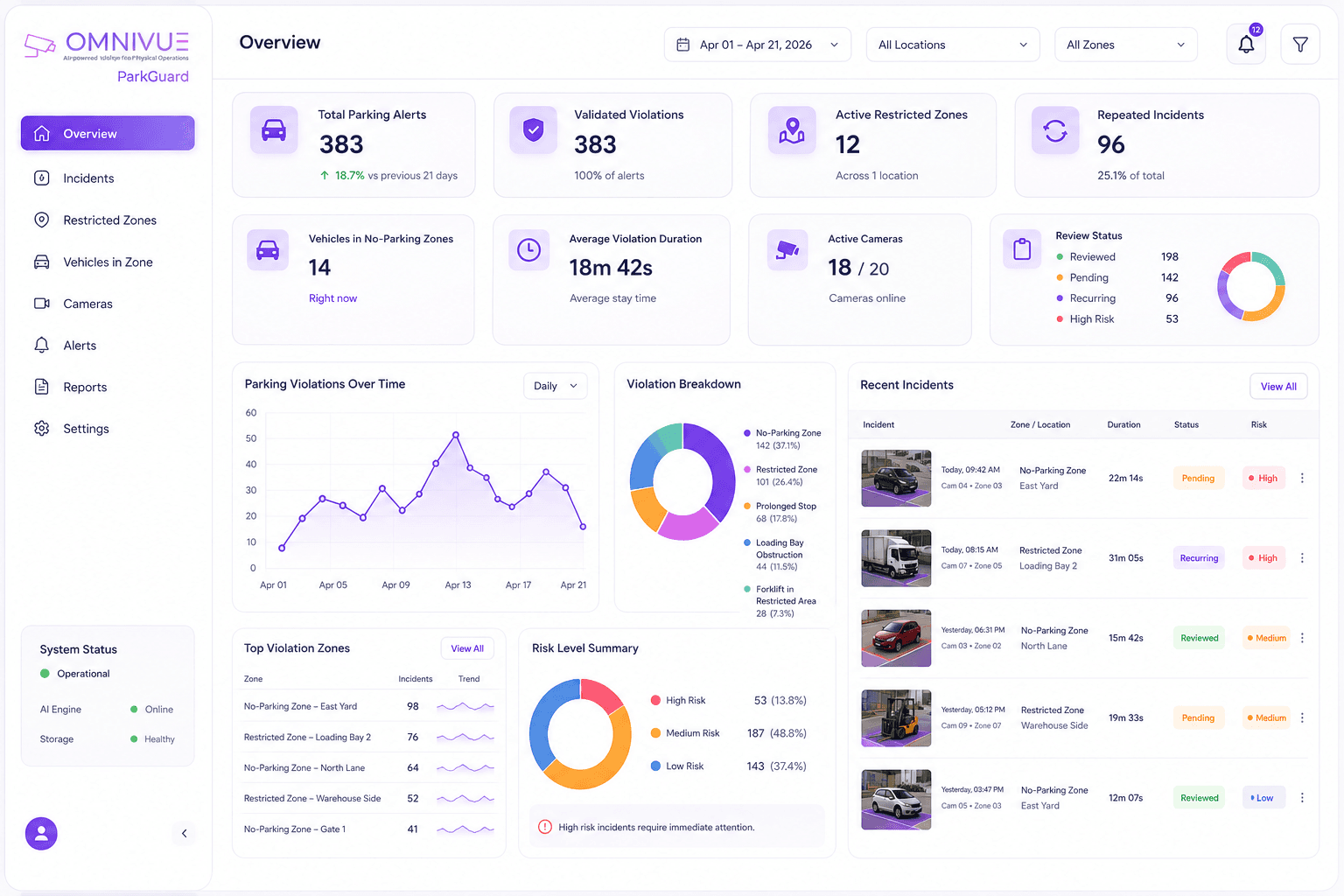
Generate alerts with snapshots, timestamps, camera reference, violation type and review status.
Reports & Enforcement Records
Maintain searchable violation history for operations review, corrective action and accountability.
Pilot validation
Validated against real restricted-zone parking behavior.
The pilot confirmed that parking violations in restricted zones are frequent, operationally relevant and difficult to consistently document through manual supervision alone.
Pilot Duration
21 days
Restricted-zone monitoring
Locations Covered
1
Sunmax warehouse
Notifications
383
ParkGuard alerts
Validated Violations
383
True violations observed
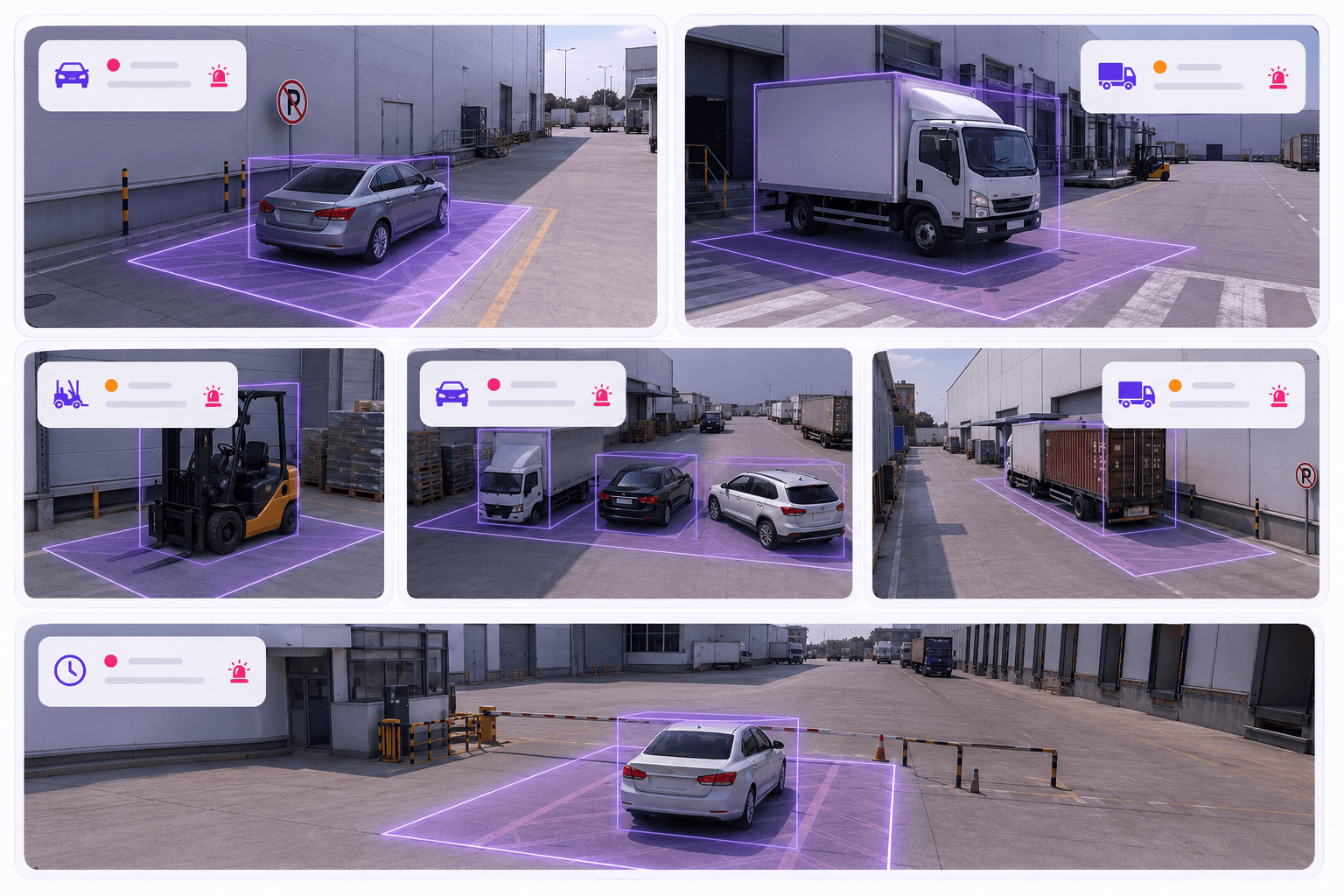
Violation scenarios
Detect temporary stops before they become operational blind spots.
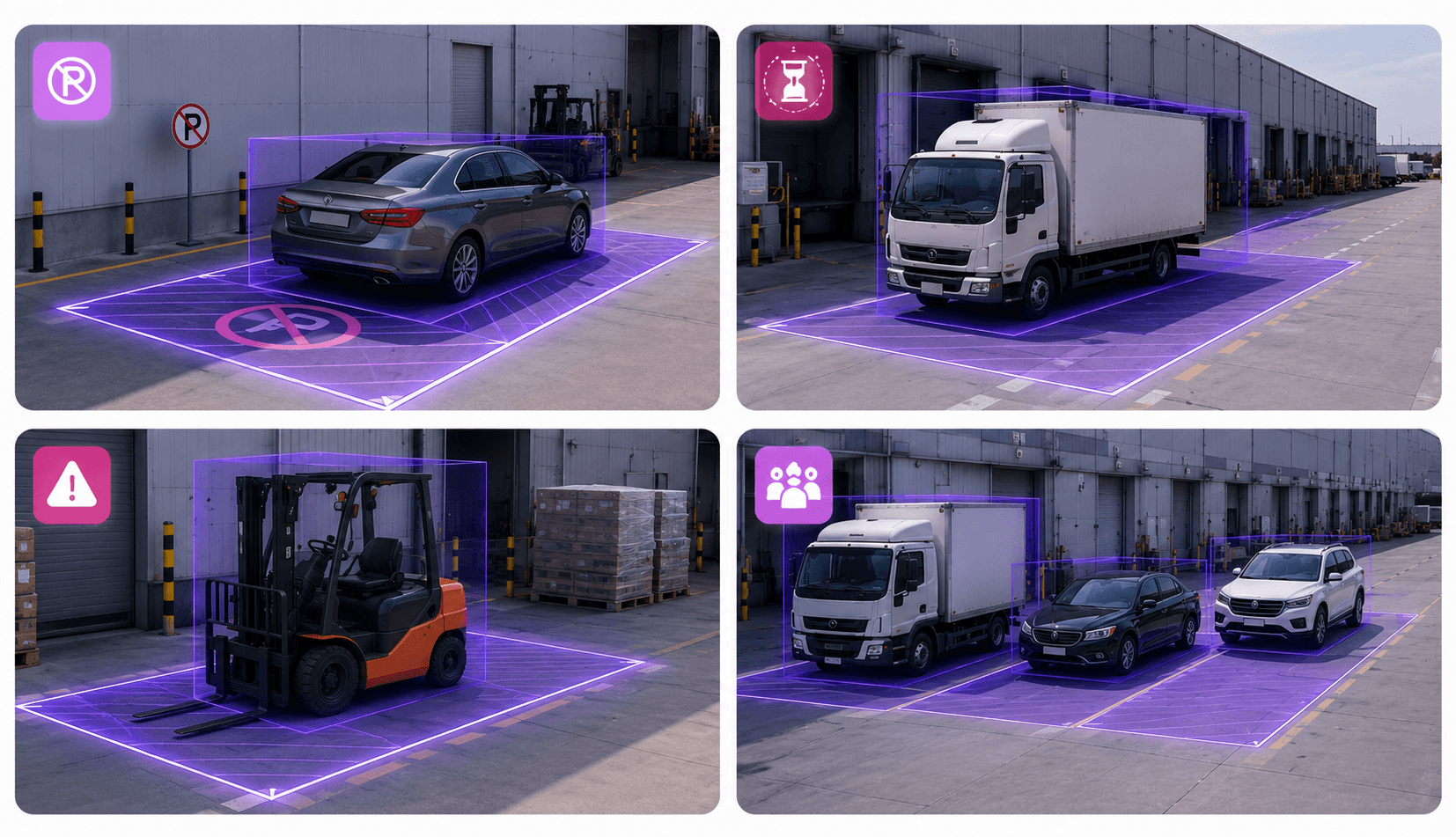
Many restricted-zone violations are temporary, but repeated temporary behavior creates congestion, obstruction and enforcement gaps.
Vehicle in no-parking zone
Detect vehicles occupying areas where parking or stopping is not allowed.
Prolonged stop converted into violation
Flag vehicles that remain inside a restricted zone beyond the allowed tolerance time.
Forklift parked in restricted area
Identify forklifts or material-handling vehicles blocking operationally sensitive spaces.
Multiple vehicles causing congestion
Highlight recurring patterns where multiple vehicles create movement bottlenecks.
Evidence and alerts
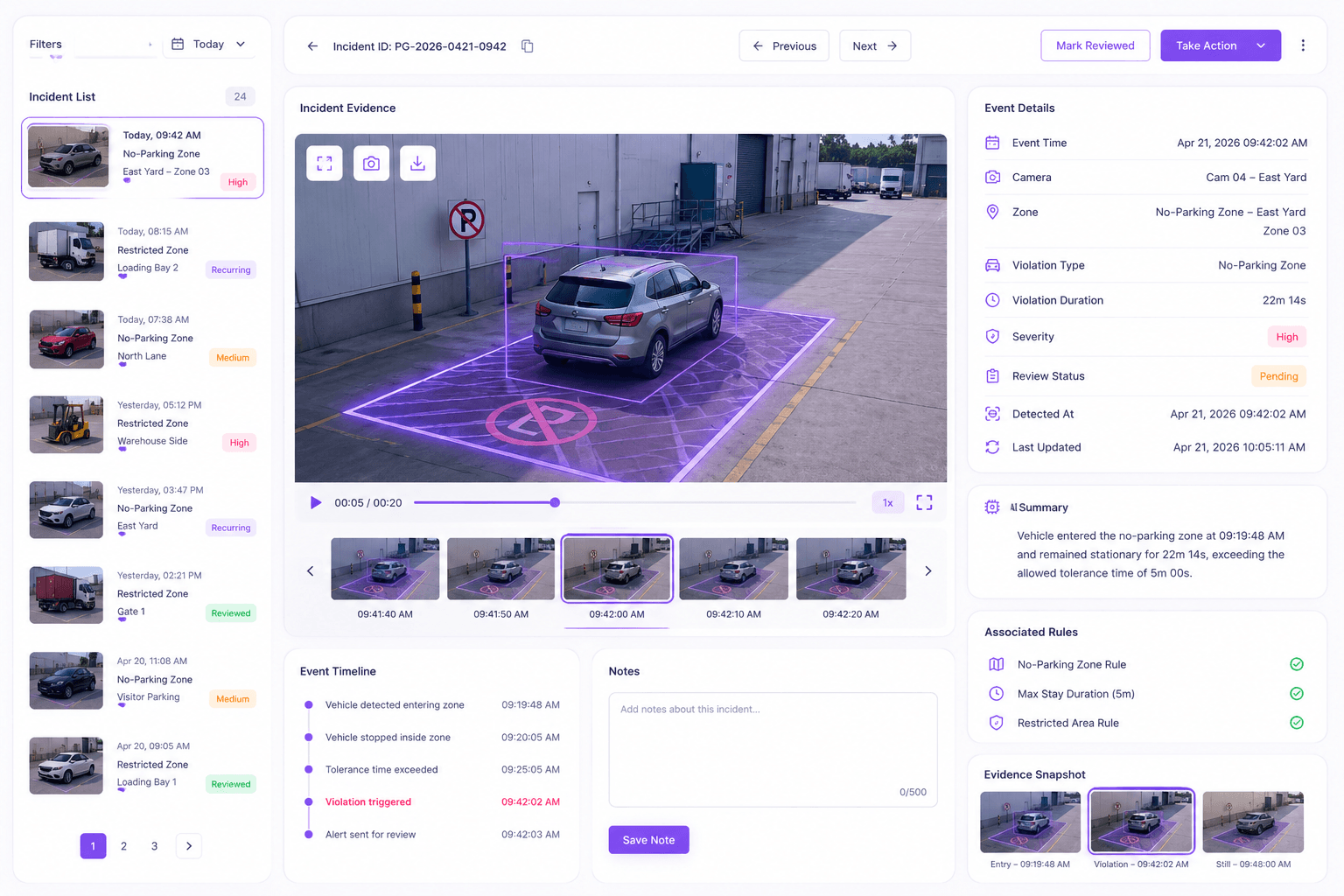
Turn parking discipline issues into reviewable incident records.
ParkGuard helps teams review violations with visual evidence, timestamp, camera reference, zone name, duration and violation status.
Vehicle parked in restricted zone
No-parking zone violation
Prolonged vehicle stop
Forklift in restricted area
Multiple vehicles in marked zone
Operational pathway obstruction
Loading bay congestion
Manual review required
Operational visibility
See high-risk zones, repeat violations and unresolved incidents.
Beyond detection, ParkGuard supports daily operations by helping teams identify violation trends, frequent obstruction points, recurring behavior and review queues.
Reduced obstruction risk
Identify vehicles blocking sensitive zones, warehouse pathways or movement areas.
Faster intervention
Convert temporary parking issues into visible alerts before they become recurring habits.
Improved operational discipline
Support stronger control over vehicle behavior around loading, storage and restricted zones.
Evidence-backed enforcement
Keep visual records that support corrective action, awareness and accountability.
Deployment setup
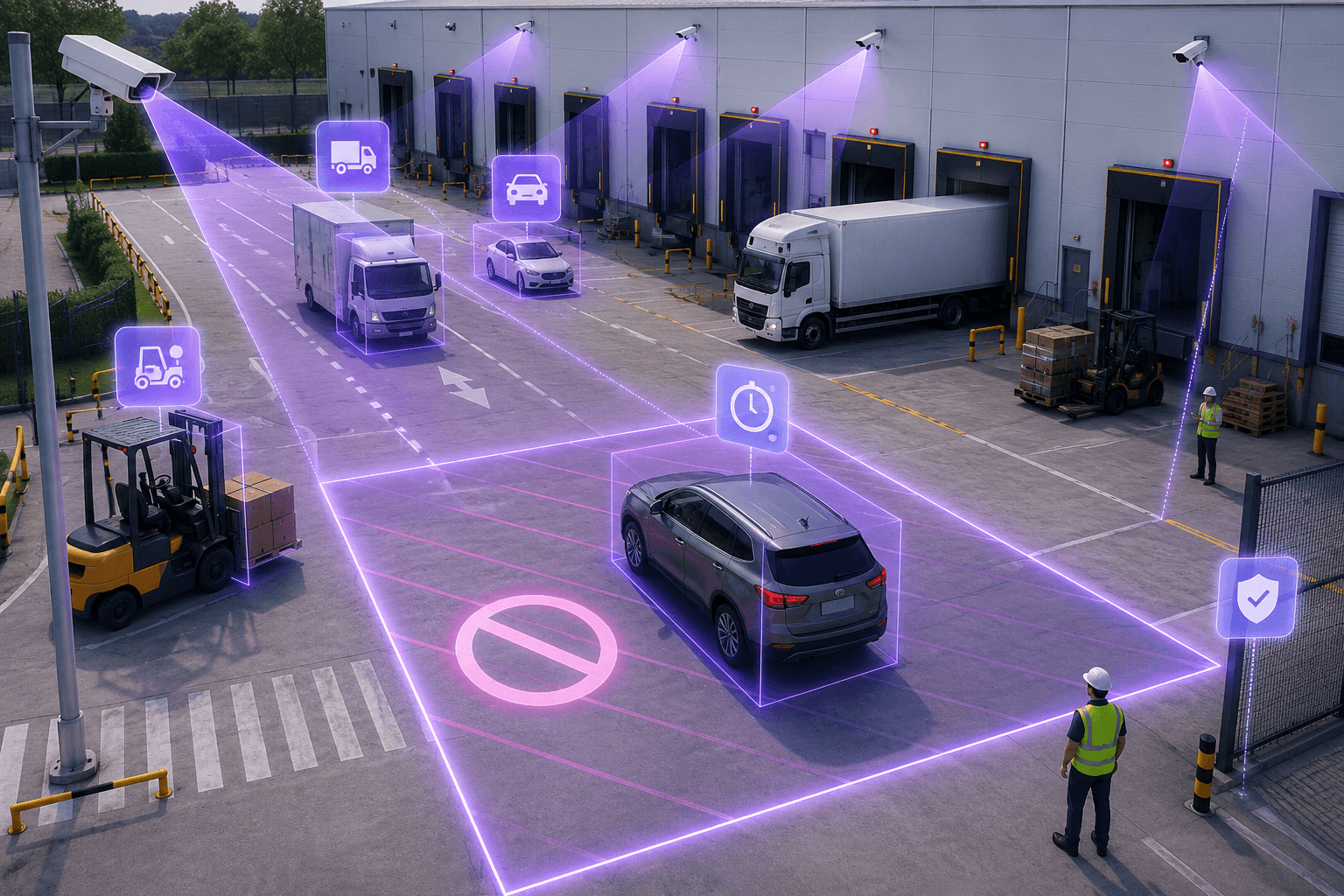
Define the zones. Configure the tolerance. Monitor continuously.
ParkGuard performs best when restricted zones are clearly defined, camera coverage is stable, and violation duration thresholds are aligned with operating realities.
Recurring behavior, not isolated cases
The pilot showed that restricted-zone parking violations occurred as part of routine operations.
Useful for operational flow
Unauthorized parking can create congestion, disrupt movement and reduce control over active work areas.
Continuous monitoring fills a manual gap
Temporary violations can go unnoticed when teams rely only on manual supervision.
Zone setup controls alert quality
Correct zone marking, tolerance timing and camera positioning help reduce noise and improve actionability.
How ParkGuard works
From camera view to restricted-zone violation record.
ParkGuard converts camera feeds into zone-aware vehicle events, duration checks, alerts and evidence-backed records.
Step 01
Capture
Camera observes vehicle movement and restricted zones.
Step 02
Zone
Configured boundaries define where vehicles should not remain.
Step 03
Measure
Duration is checked against the allowed tolerance period.
Step 04
Alert
Violation alerts are created when rules are breached.
Step 05
Record
Evidence is stored for review and corrective action.
Architecture
Edge AI zone monitoring for vehicle discipline.
ParkGuard is designed for local processing, warehouse camera feeds, configured no-parking zones, incident review and optional operational workflows.
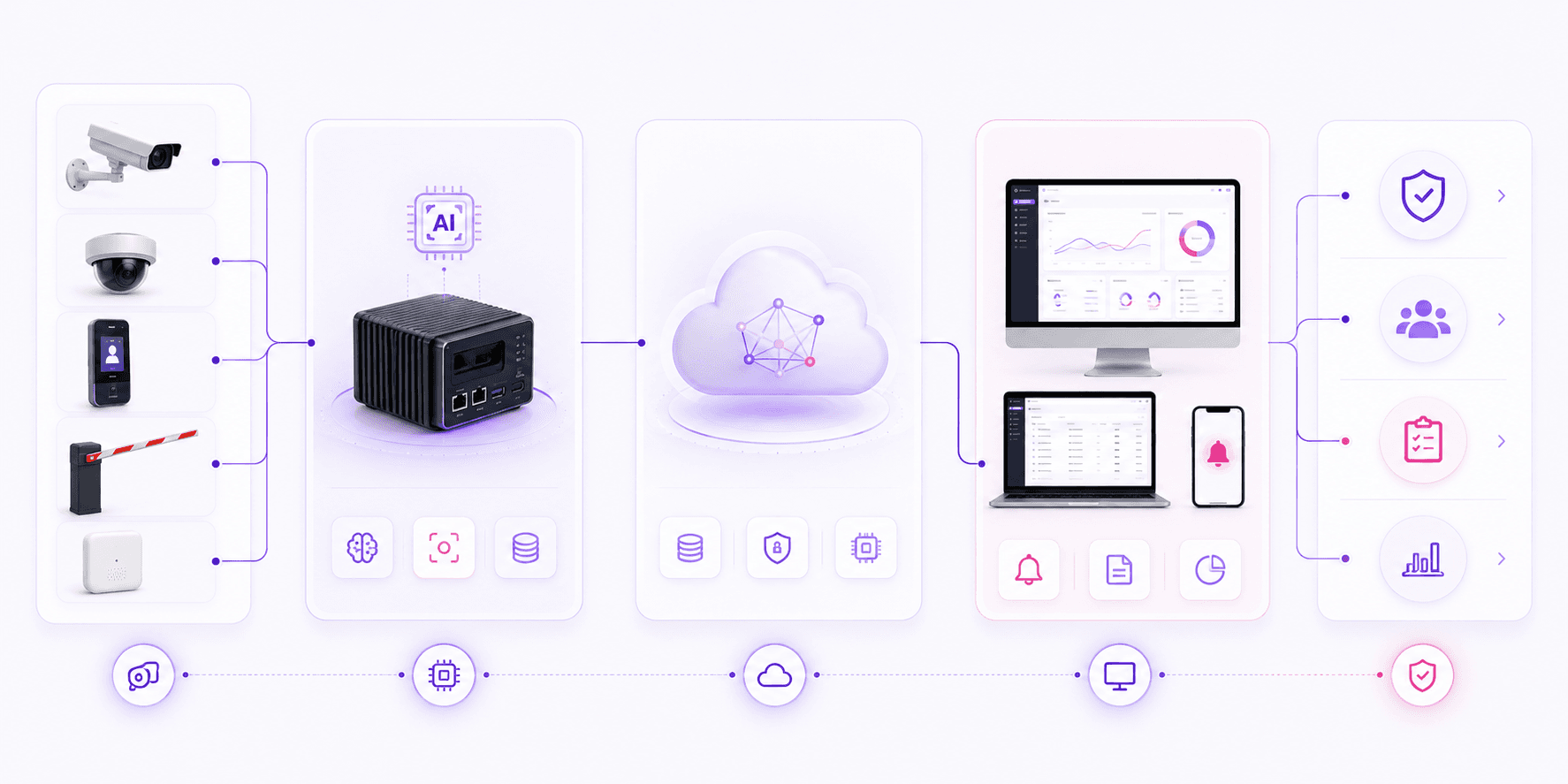
Input Layer
Edge Layer
Platform Layer
Application Layer
Outcome
Built for vehicle-sensitive operations
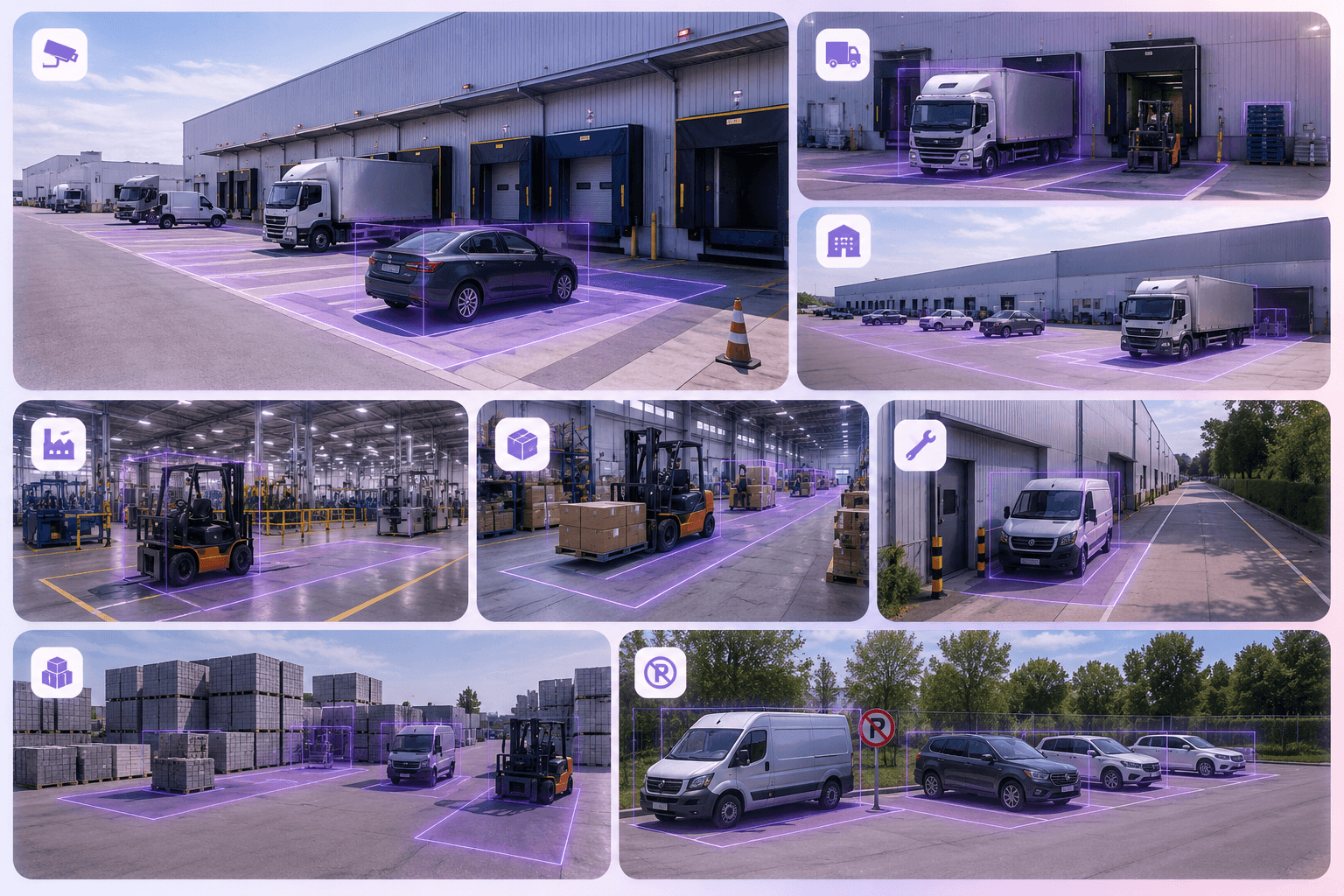
Restricted-zone visibility for warehouses, yards and loading areas.
ParkGuard is useful for operations where vehicle placement, loading movement, service lanes and restricted boundaries need continuous review.
Omnivue ParkGuard
Want to see how ParkGuard fits your operation?
Share your loading zones, restricted areas, camera coverage, vehicle flow and tolerance rules. Our team will suggest the right ParkGuard setup.
What we’ll review
You do not need a finalized technical scope. A short discussion around your vehicle-sensitive areas and current camera coverage is enough to recommend the right starting setup.