
AI speed monitoring for forklifts and warehouse movement.
SpeedGuard helps HSE and operations teams detect forklift overspeeding, identify recurring unsafe driving behavior, and build evidence-backed speed compliance across warehouse zones.
Pilot validation note
Validated across Technopark and Sunmax warehouse locations for forklift overspeed detection using configured safe-speed thresholds.
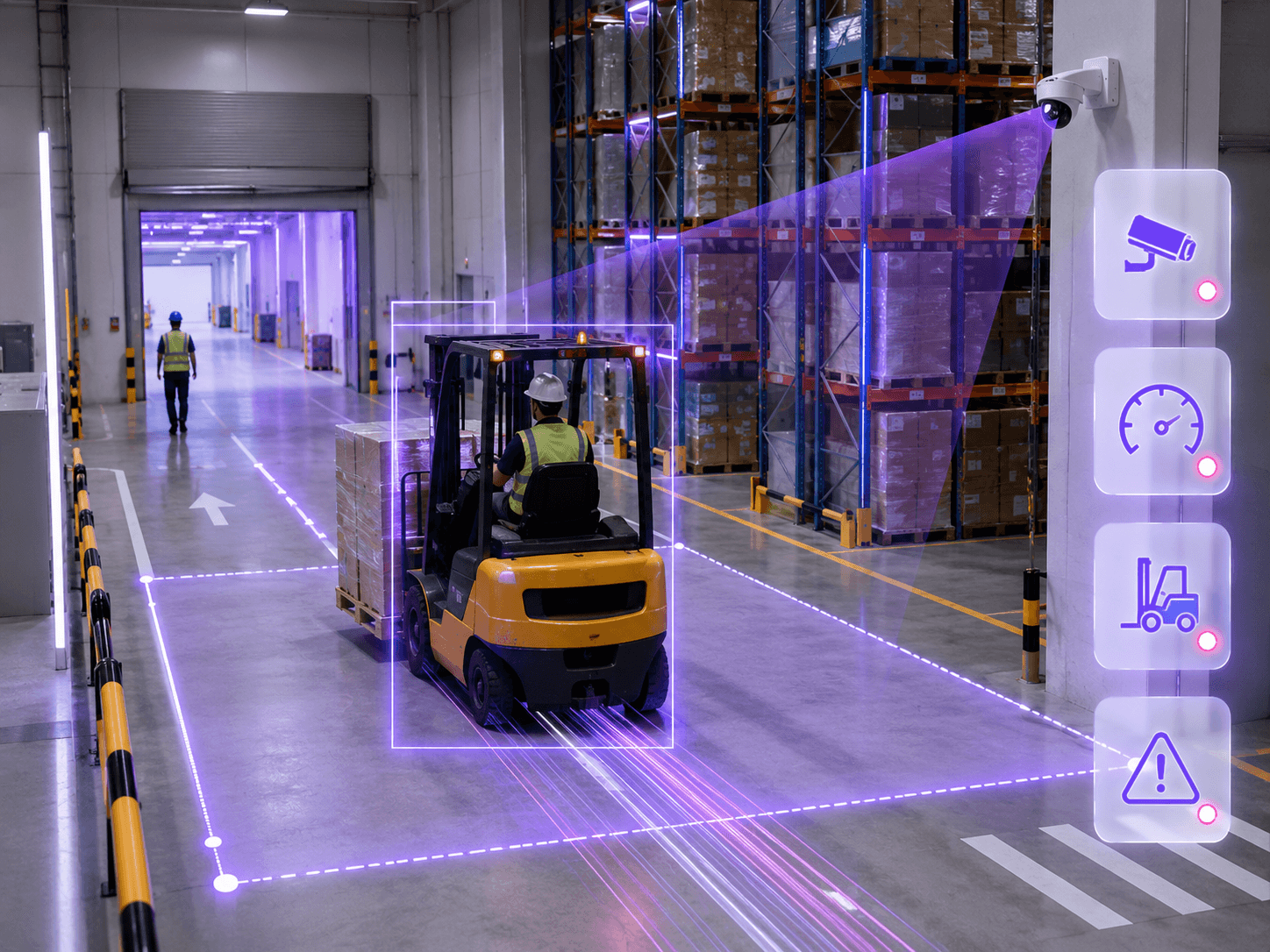
Forklift
Detected
Speed
Checked
Event
Logged
What SpeedGuard manages
More than speed alerts. A control layer for safer forklift movement.
SpeedGuard connects forklift detection, zone rules, threshold checks, overspeed alerts and incident evidence into one HSE workflow.
Forklift Speed Monitoring
Monitor forklift movement across operational areas and detect when speed exceeds configured safe limits.
Zone-based Speed Rules
Define safe-speed thresholds for warehouse aisles, yards, loading bays and movement zones.
Overspeed Warnings
Identify early overspeed warnings before they become repeated high-risk driving behavior.
High-risk Violations
Flag severe speed breaches where collision risk, stopping control and infrastructure damage risk increase.
Evidence-backed Alerts
Generate alerts with visual evidence, timestamp, camera reference, speed level and violation status.
Operator Training Records
Maintain incident history to support awareness, corrective action and targeted operator training.
Pilot validation
Validated against recurring forklift overspeed behavior.
The pilot confirmed that forklift overspeeding is a practical and recurring operational risk. Continuous monitoring provides measurable visibility that is difficult to maintain through manual observation alone.
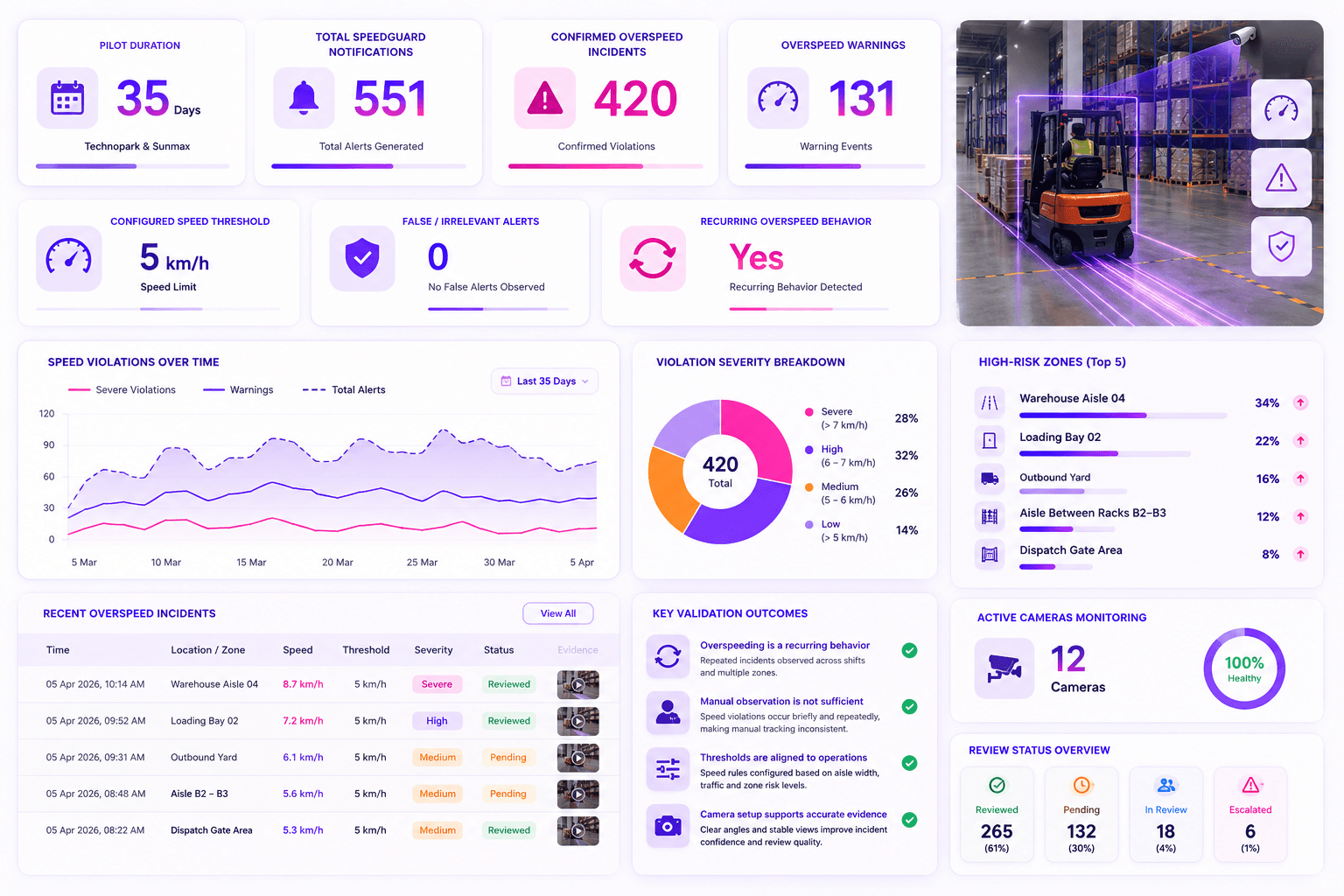
Pilot Duration
35 days
Technopark and Sunmax
Total Notifications
551
SpeedGuard alerts
Confirmed Incidents
420
Overspeed violations
Warnings
131
Overspeed warning events
Overspeed scenarios
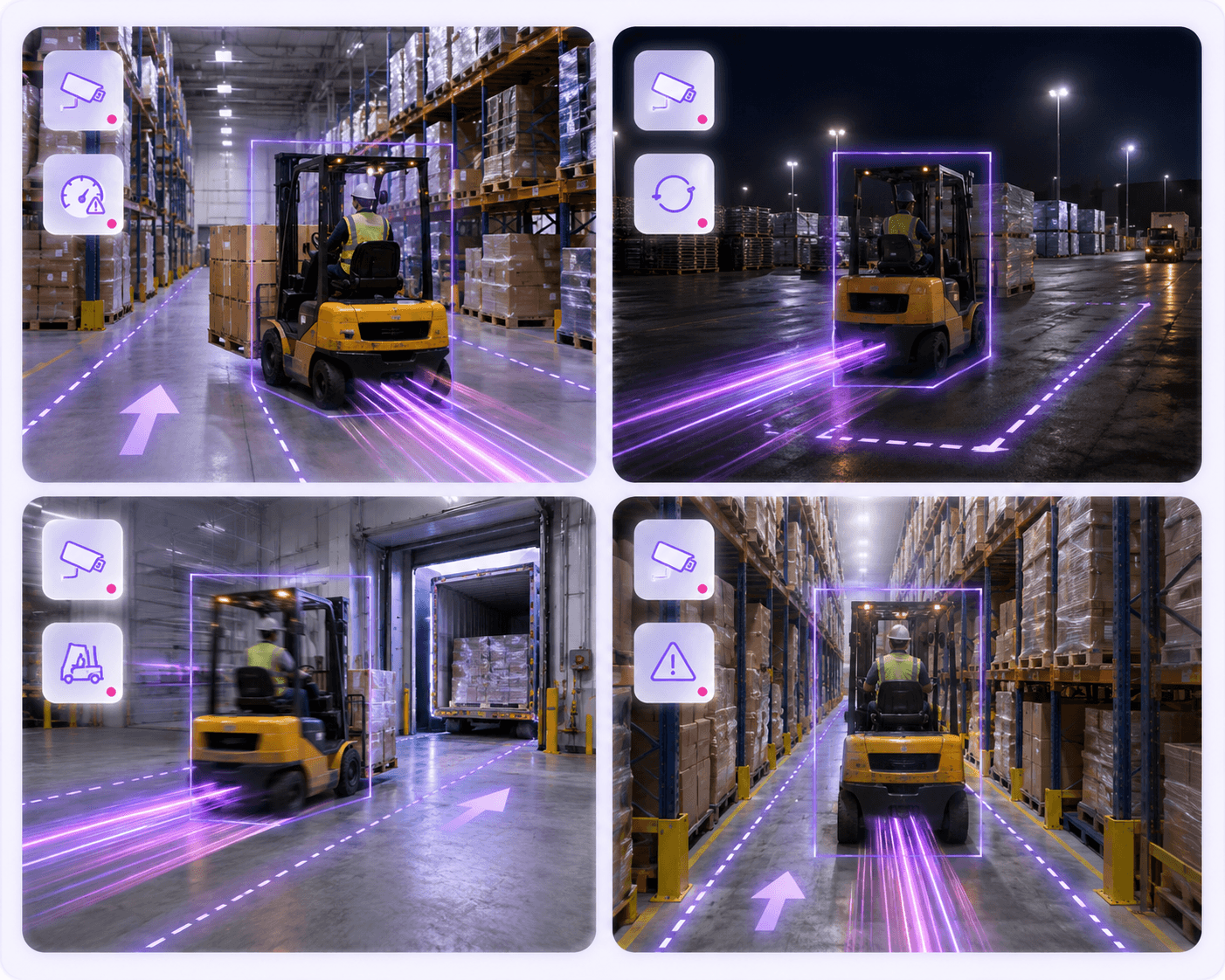
Detect unsafe speed behavior before it becomes an accident risk.
Speed violations may last only a few seconds, but repeated behavior can increase the risk of collision, inventory damage and unsafe movement around people.
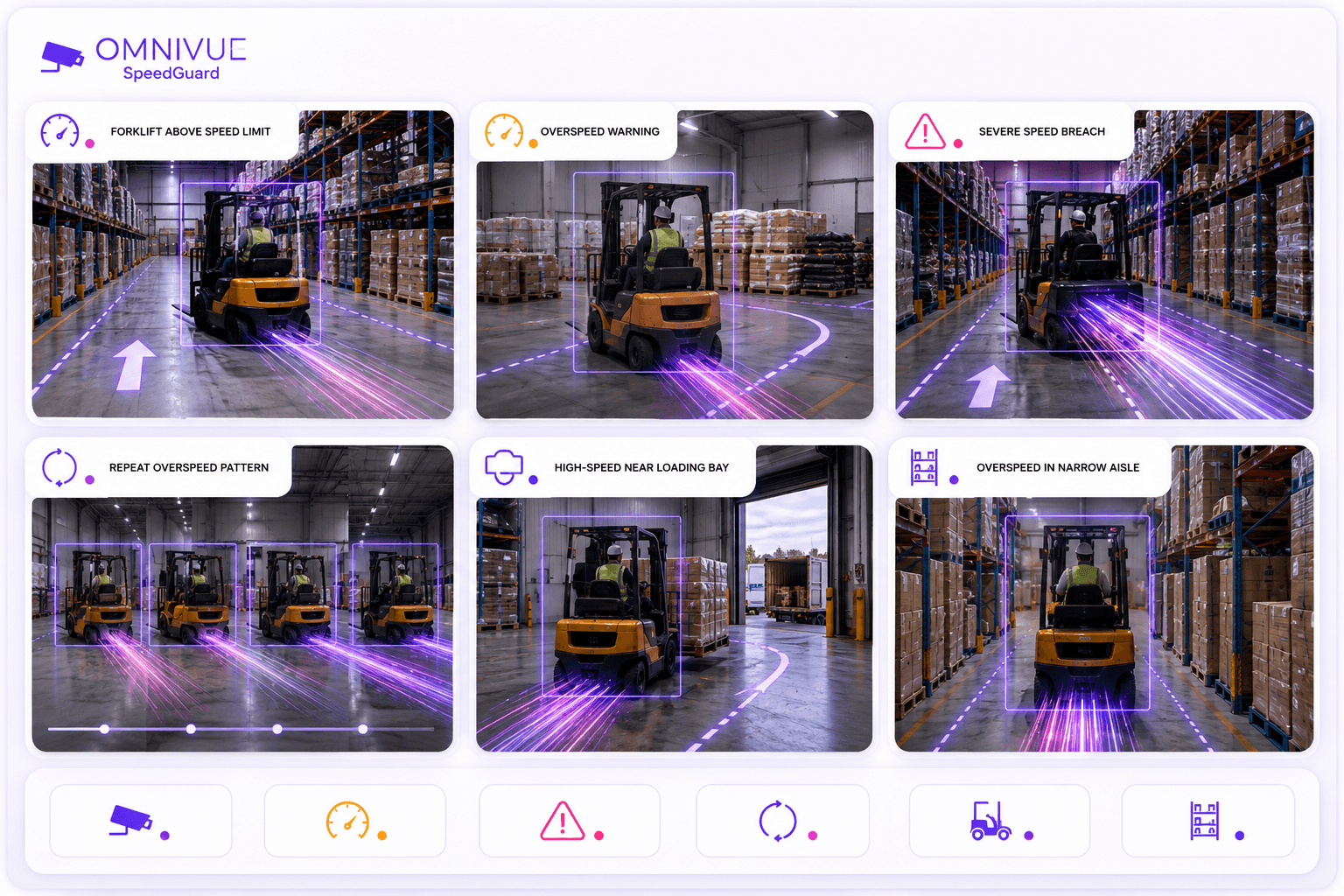
Forklift above safe threshold
Detect forklifts moving faster than the configured safe operating speed.
Repeat overspeed pattern
Identify recurring unsafe driving behavior across the same zone, shift or movement path.
High-speed movement near pedestrians
Flag overspeed activity where pedestrian presence or confined space increases risk.
Severe speed breach
Highlight major threshold exceedance that requires urgent review and corrective action.
Speed alerts
Turn unsafe forklift movement into evidence-backed alerts.
SpeedGuard helps HSE teams review overspeed incidents with visual context, time, camera reference, configured threshold and severity.
Forklift above speed limit
Overspeed warning
Severe speed breach
Repeat overspeed pattern
High-speed movement near loading bay
Overspeed in narrow aisle
Overspeed near pedestrian zone
Manual HSE review required
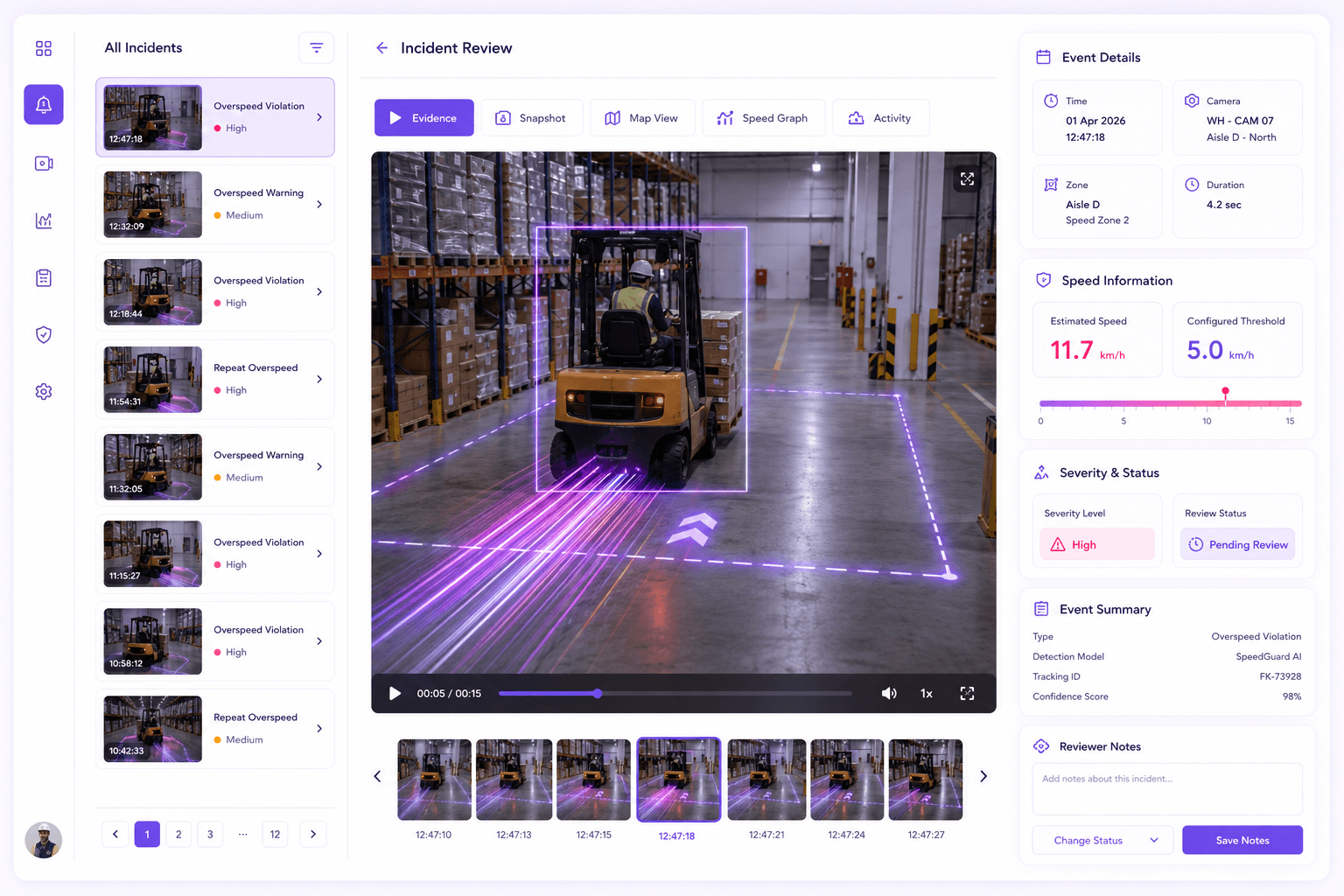
Incident review
Give HSE teams a speed record they can act on.
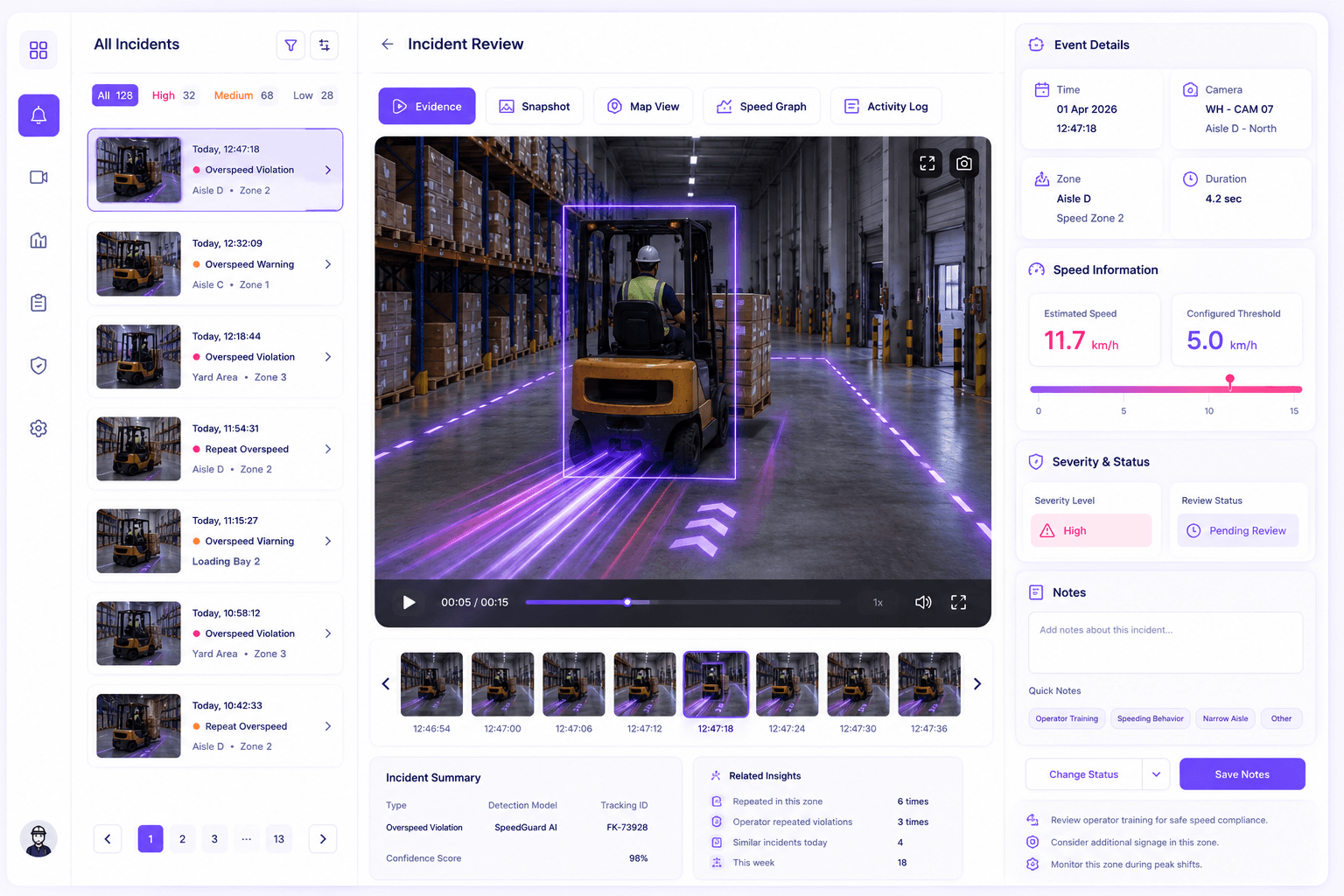
Each SpeedGuard event can include a timestamp, camera reference, movement zone, estimated speed, threshold, severity level and review status.
Reduced accident risk
Identify overspeed behavior that increases collision, loss-of-control and stopping-distance risk.
Faster intervention
Convert unsafe driving behavior into visible alerts before repeated patterns continue unnoticed.
Better movement discipline
Support safer forklift movement across warehouse aisles, loading areas and operational zones.
Evidence-backed training
Use visual records and speed trends to support operator coaching, awareness and corrective action.
Operational visibility
Track recurring speed risks and operator behavior patterns.
Beyond alerts, SpeedGuard helps teams identify frequent overspeed zones, repeated violations, warning trends and areas where training or enforcement is needed.
Overspeeding is recurring, not isolated
The pilot showed repeated forklift speed violations across monitored warehouse areas.
Manual supervision is not enough
Unsafe speed behavior can occur briefly and repeatedly, making it difficult to consistently observe manually.
Thresholds should match operating realities
Speed rules can be configured by zone so alerts remain relevant to aisle width, traffic and risk level.
Camera setup improves evidence quality
Stable camera angles, clear views and adequate lighting help improve review quality and incident confidence.
Deployment setup
Configure speed rules for the zones where movement risk is highest.
SpeedGuard performs best when camera views cover forklift movement paths clearly and thresholds are configured based on each area’s traffic, width and safety requirements.
How SpeedGuard works
From forklift movement to speed alert and corrective action.
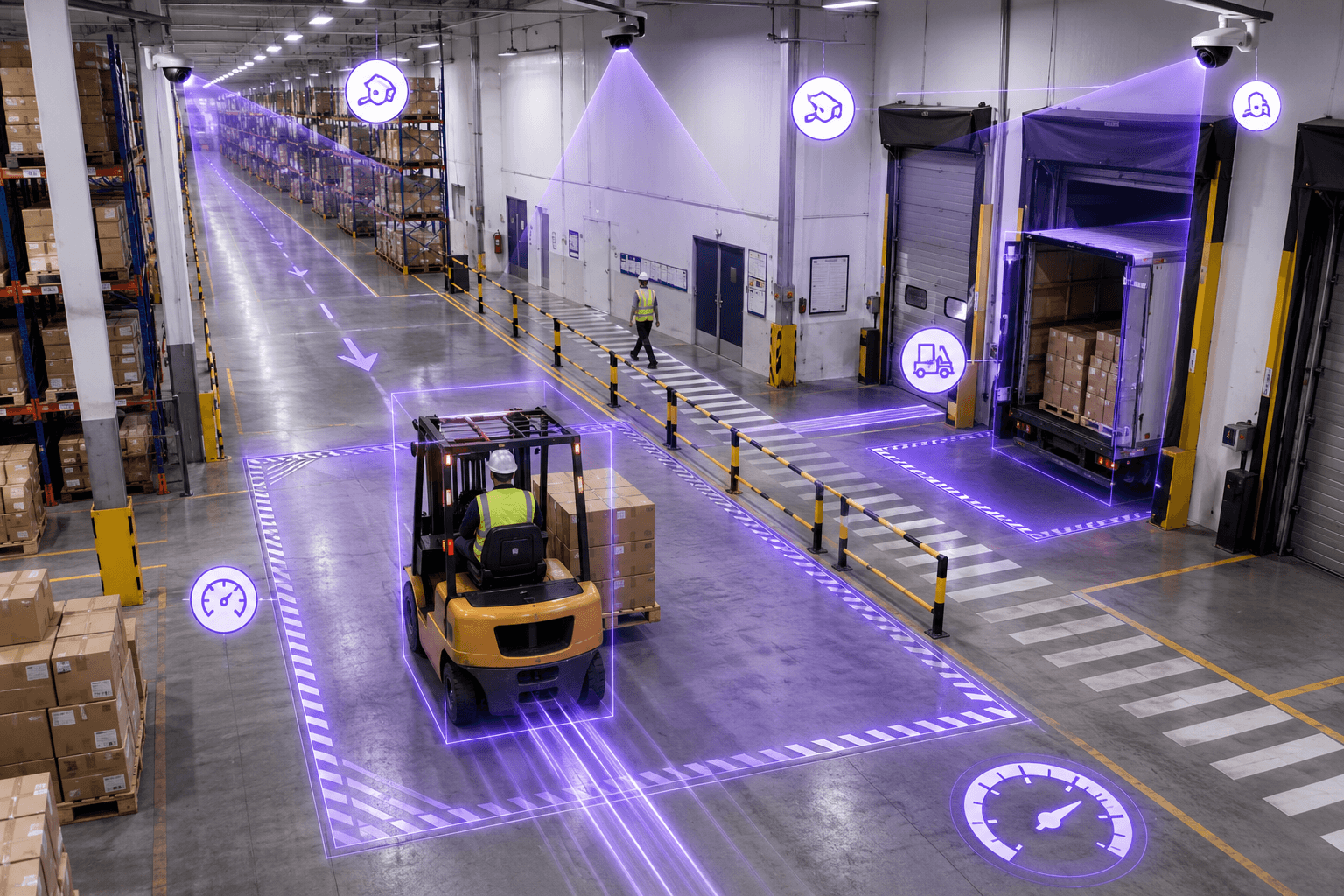
SpeedGuard converts camera views into forklift movement events, threshold checks, violation alerts and training-ready records.
Step 01
Capture
Camera observes forklift movement across defined zones.
Step 02
Track
AI detects forklift movement and path behavior.
Step 03
Measure
Movement is checked against configured safe-speed thresholds.
Step 04
Alert
Overspeed warnings and violations are generated for review.
Step 05
Record
Events are stored for enforcement, reporting and training.
Architecture
Edge AI speed monitoring for high-movement warehouse operations.
SpeedGuard is designed for local processing, existing camera feeds, configured movement zones, overspeed review and optional alert workflows.
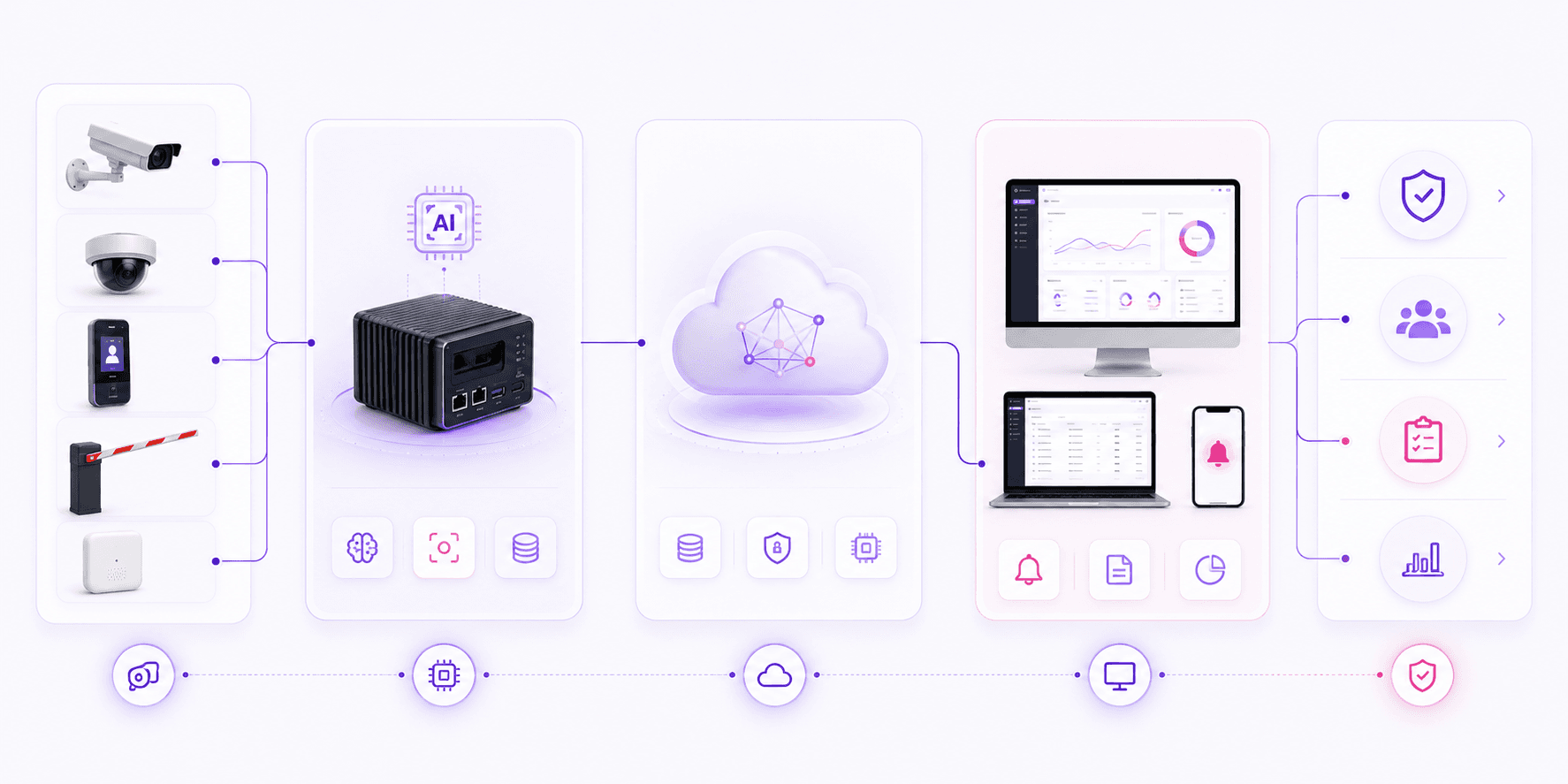
Input Layer
Edge Layer
Platform Layer
Application Layer
Outcome
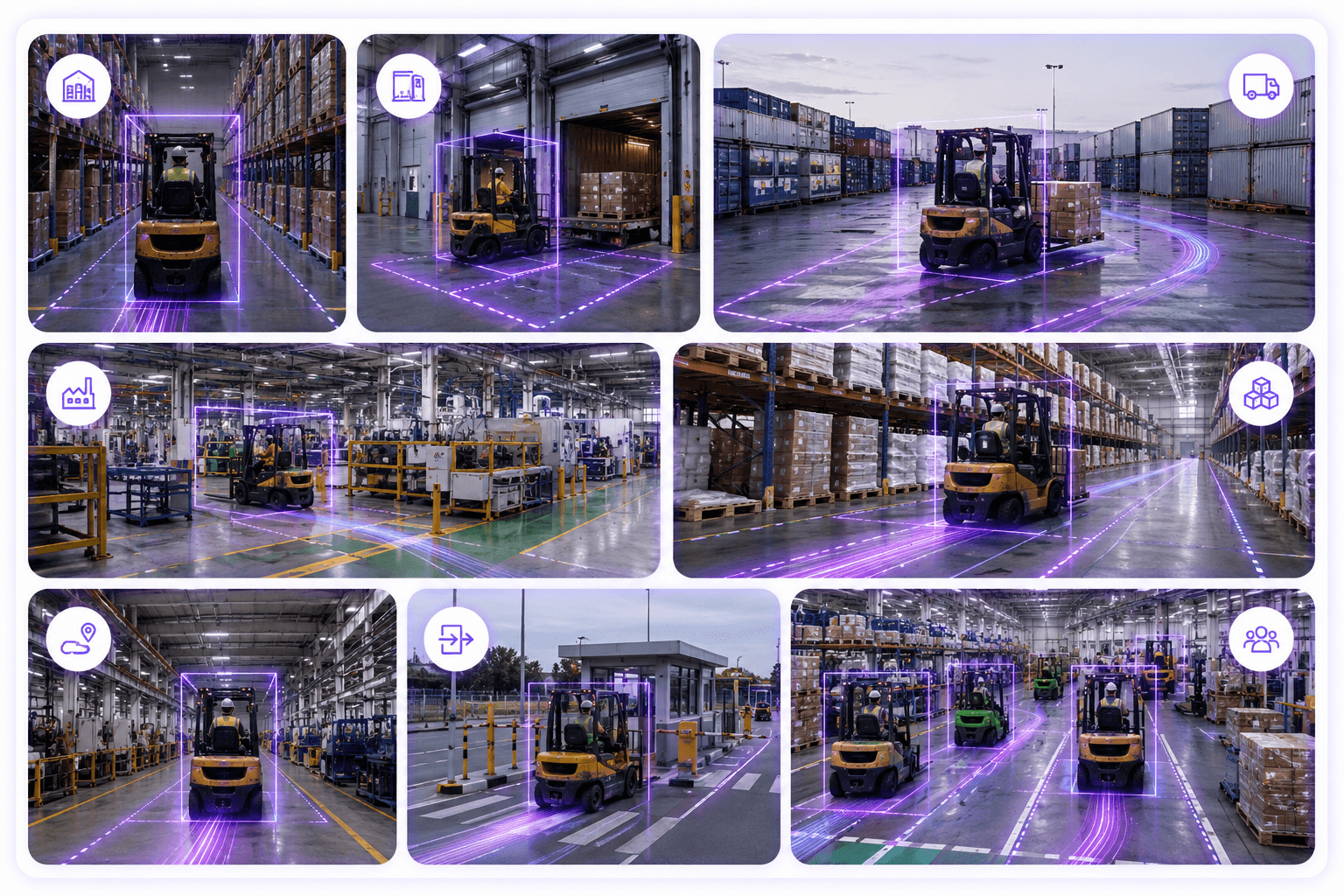
Built for high-movement environments
Speed visibility for warehouses, yards and forklift-heavy operations.
SpeedGuard is useful wherever forklifts, material movement and pedestrian proximity require stronger speed discipline.
Omnivue SpeedGuard
Want to see how SpeedGuard fits your warehouse movement workflow?
Share your forklift routes, camera coverage, speed thresholds, high-risk zones and HSE review process. Our team will suggest the right SpeedGuard setup.
What we’ll review
You do not need a finalized technical scope. A short discussion around forklift paths, movement risk and current camera coverage is enough to recommend the right starting setup.