
AI video workflows for attendance, access, visitors and public facility operations.
Use existing CCTV or IP cameras to improve attendance records, visitor verification, controlled access, vehicle gate movement, queue visibility and evidence-backed audits across government offices and public-sector facilities.
Attendance
Presence records
Access
Visitor approvals
Evidence
Audit-ready events
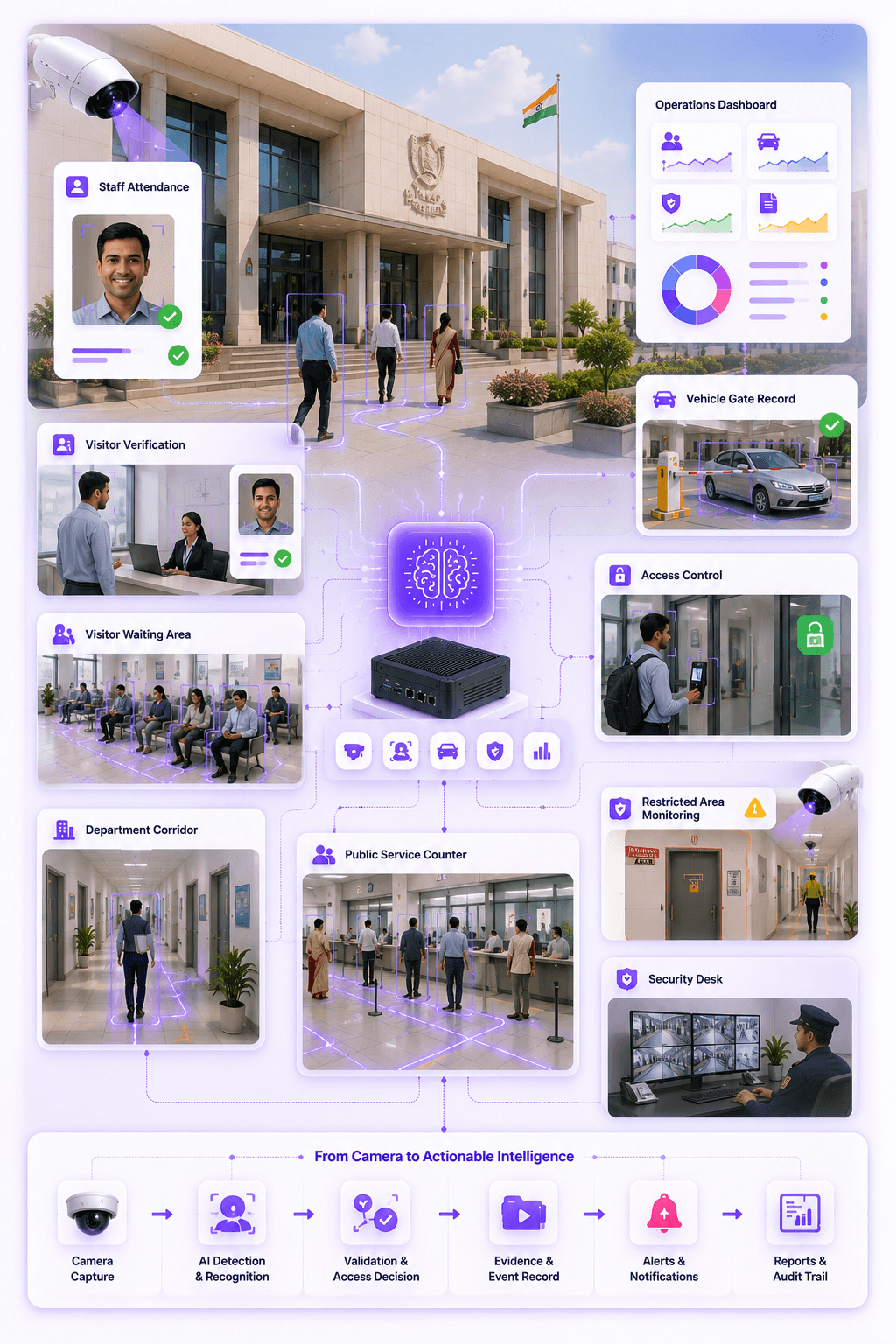
Entry
Verified movement
Visitor
Approval flow
Vehicle
Gate record
Audit
Evidence trail
Priority workflows
Public-sector operations need more than passive CCTV.
Government sites need structured records for people, vehicles, visitors, restricted areas and public-facing service operations. Omnivue turns camera views into accountable workflows.
Core idea
Every important physical event should be linked to identity, location, time, camera evidence and review status.
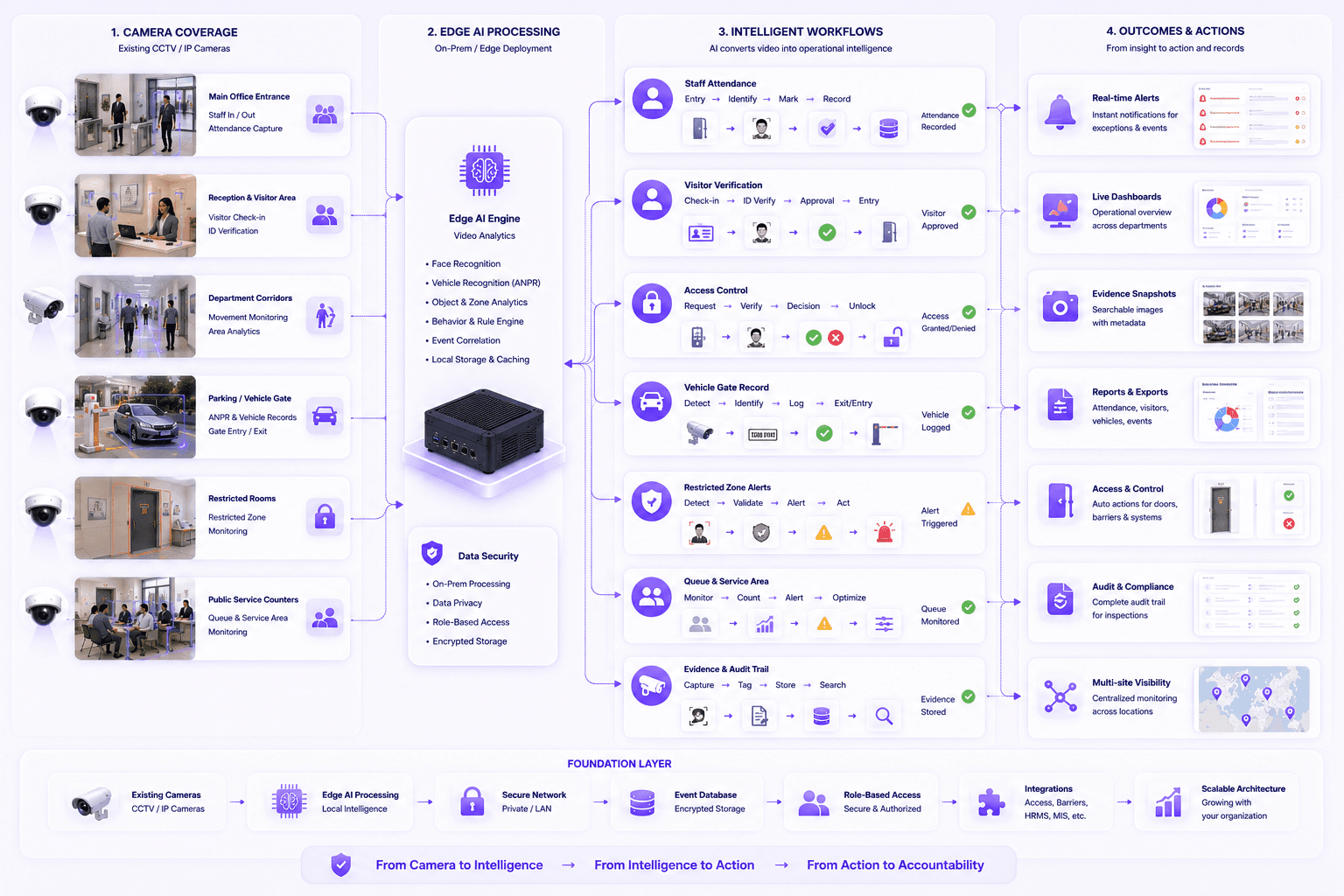
Staff Attendance
Capture employee attendance at office gates, building entrances or department blocks using existing cameras.
Visitor & Citizen Entry
Record visitor flow, reception approvals, public entry points and controlled access areas.
Vehicle Gate Records
Identify vehicles at government premises, parking gates and controlled entry lanes.
Restricted Area Monitoring
Monitor sensitive rooms, restricted corridors, record rooms and protected operational zones.
Queue & Public Service Areas
Understand crowding, waiting areas and service counter pressure in public-facing offices.
Evidence & Audit Trail
Maintain searchable records with camera, time, location, event type and evidence snapshots.
Operational gap
Public offices already have cameras. The missing layer is workflow intelligence.
CCTV footage is useful after an incident. Omnivue helps convert it into daily operational records, alerts and audit-ready evidence.
Attendance records are fragmented
Manual registers, biometric points and department-level records are difficult to reconcile across buildings.
Visitor movement is difficult to verify
Public offices need clear records of who entered, why they came, where they went and when they exited.
Sensitive zones need better visibility
Restricted rooms, record sections, control areas and entry corridors require evidence-backed monitoring.
Incident review depends on CCTV search
Teams often need to manually scan video when an incident, dispute or investigation happens.
Recommended Omnivue stack
The industry page maps business workflows to the right modules.
Government and public-sector deployments can combine attendance, access, ANPR, parking, safety and operational monitoring depending on the site.
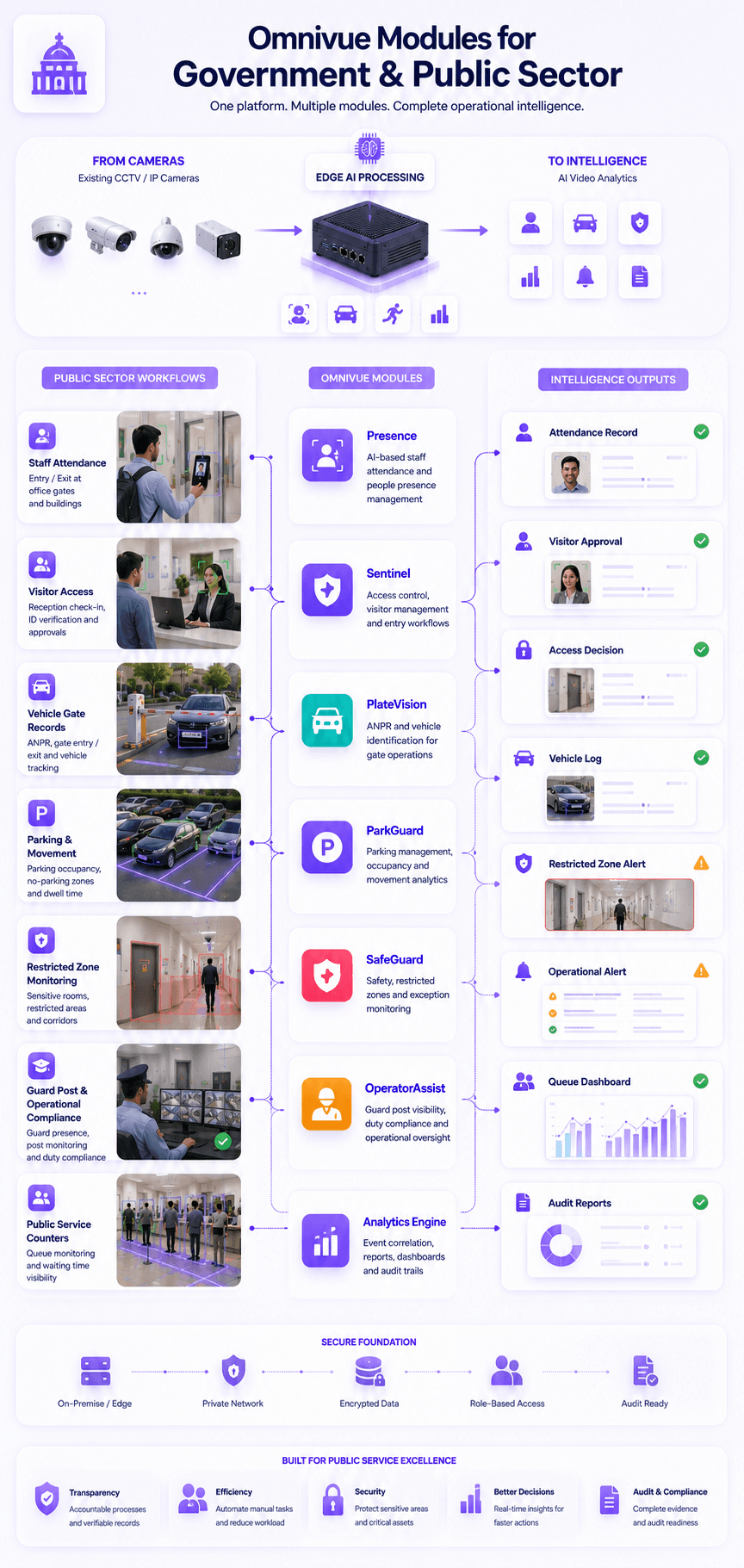
Presence
Staff attendance and presence visibility
Sentinel
Access, visitor and controlled entry workflows
PlateVision
Vehicle identification and gate movement records
ParkGuard
Parking, waiting zones and vehicle rule monitoring
SafeGuard
Emergency access, restricted areas and safety alerts
OperatorAssist
Guard desk, staff post and operational compliance visibility
Deployment zones
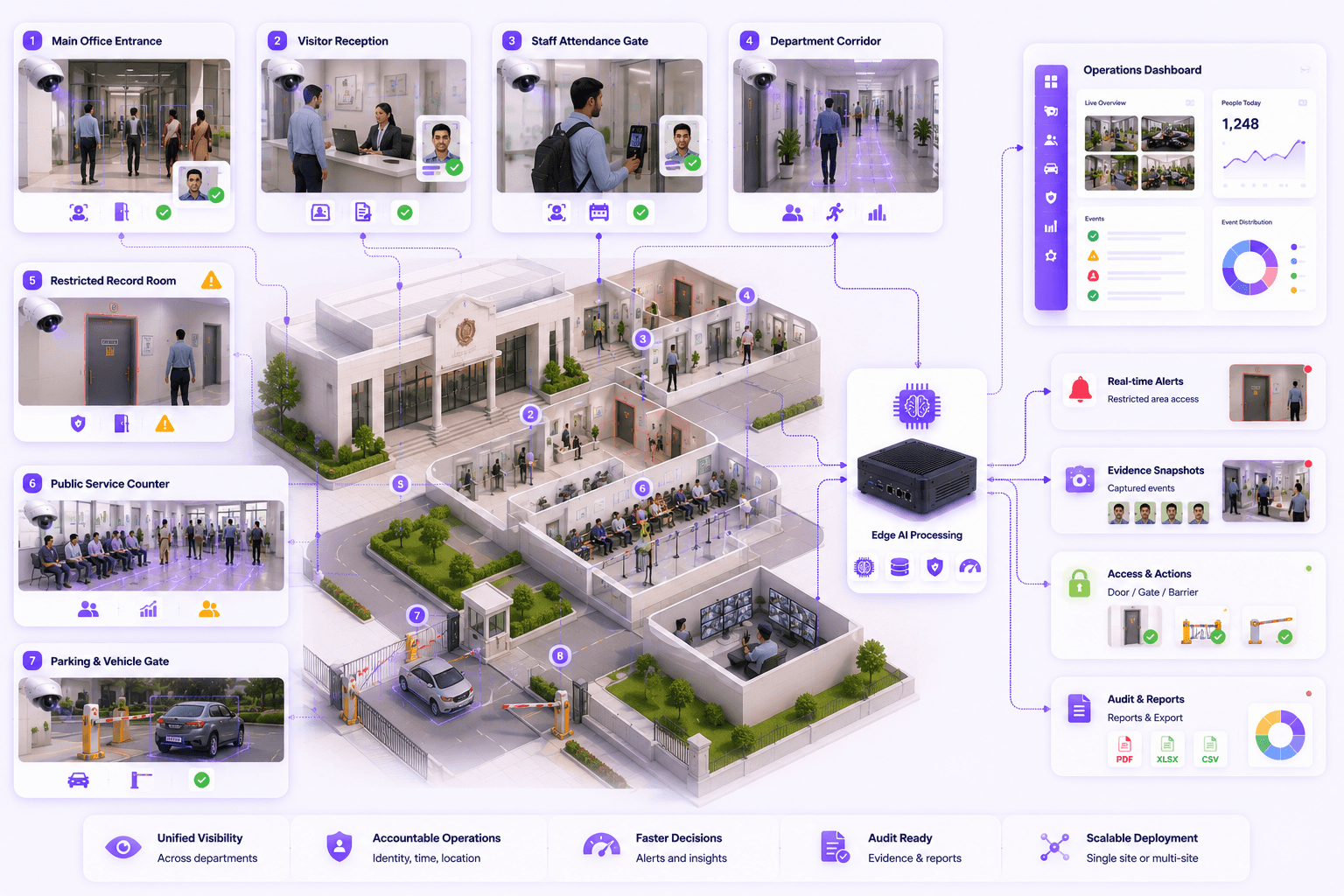
Map AI workflows around real public-sector spaces.
Each zone can have different rules: attendance at the entrance, access at restricted doors, visitor tracking at reception, vehicle records at the gate and queue visibility at public counters.
Main office entrance
Department building gates
Visitor reception area
Security desk and guard post
Parking and vehicle entry lane
Restricted rooms and record sections
Public service counters
Corridors and waiting areas
Outcomes
What improves after deployment?
Reduce manual attendance and visitor record handling
Improve visibility across departments and buildings
Create evidence-backed entry, exit and incident records
Support controlled access and restricted-zone monitoring
Improve audit readiness for public-sector operations
Use existing CCTV or IP cameras where suitable
Fit & readiness
What should be planned first?
Department-wise workflow mapping
Identify which departments, buildings, gates and public counters need separate rules or reports.
Controlled entry zones
Camera-based attendance and access work best when entry paths and waiting zones are clearly defined.
Usable camera angles
Face, vehicle and zone intelligence requires cameras positioned where the required evidence is visible.
Local deployment preference
Government environments may require on-premise, offline-first or private-network deployment models.
Implementation approach
A practical deployment path for public-sector sites.
The goal is not to replace the entire surveillance system. The goal is to add an AI workflow layer over selected camera views and operational zones.
Site assessment
Map gates, offices, public counters, camera views, visitor flow and restricted areas.
Workflow configuration
Configure attendance, visitor, vehicle, access, queue and evidence rules by department or zone.
Edge deployment
Run AI processing locally where required and connect selected events to dashboards and alerts.
Reporting and review
Generate department-wise records, audit trails, exception lists and searchable evidence.
Share your department or facility workflow. We’ll map the right setup.
Tell us your office layout, cameras, gates, departments, visitor process, restricted areas, attendance rules and reporting requirements. Omnivue can help design the right public-sector AI workflow.