
AI video intelligence for high-speed ANPR, tolling, road safety and expressway operations.
Use existing highway cameras, toll cameras and IP camera infrastructure to create vehicle events, plate recognition, queue visibility, stopped vehicle alerts, wrong-way detection, obstruction monitoring and evidence-backed operational reports.
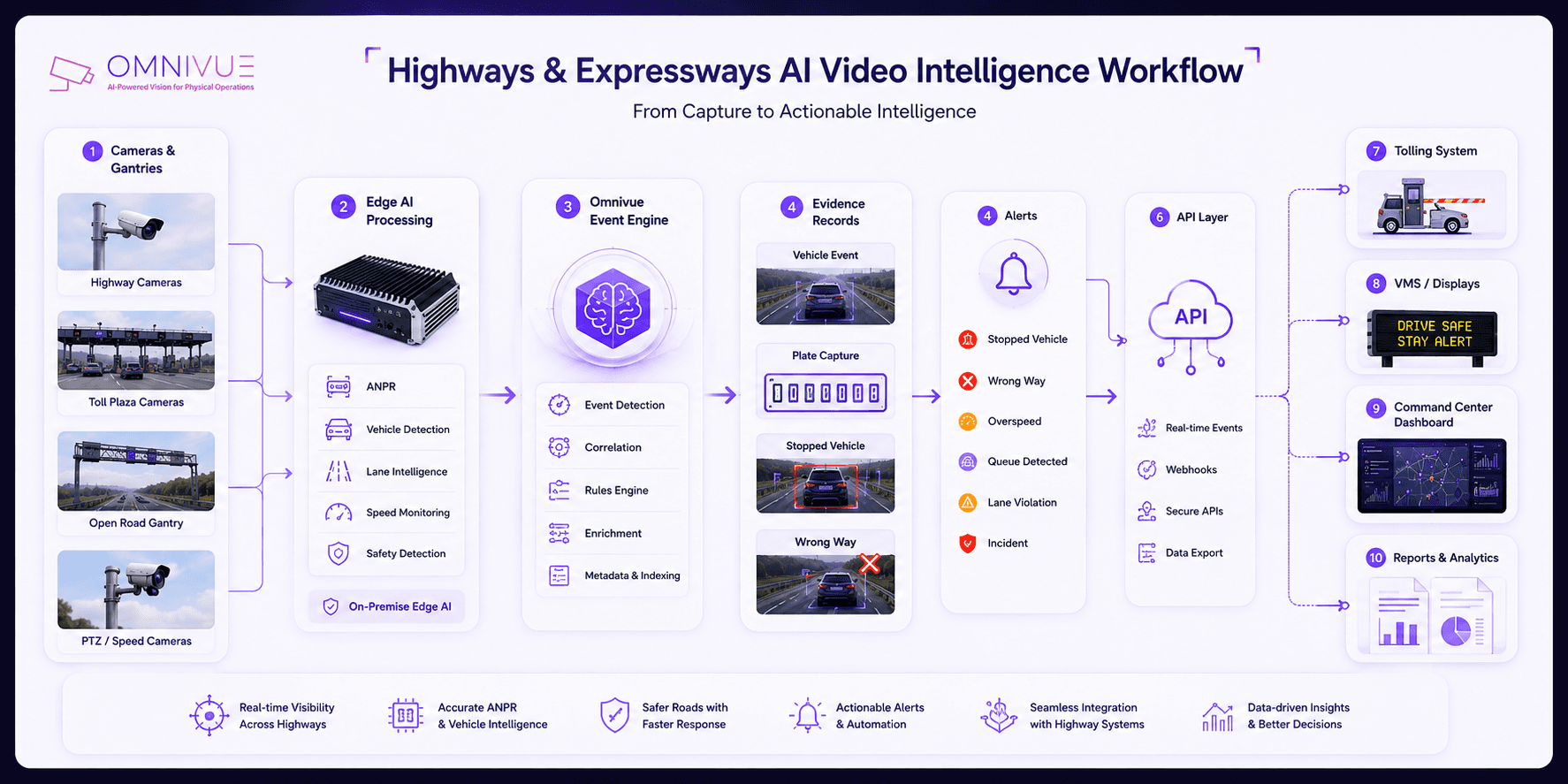
Vehicle
Plate and lane event
Safety
Exception alerts
Control
Reports and API
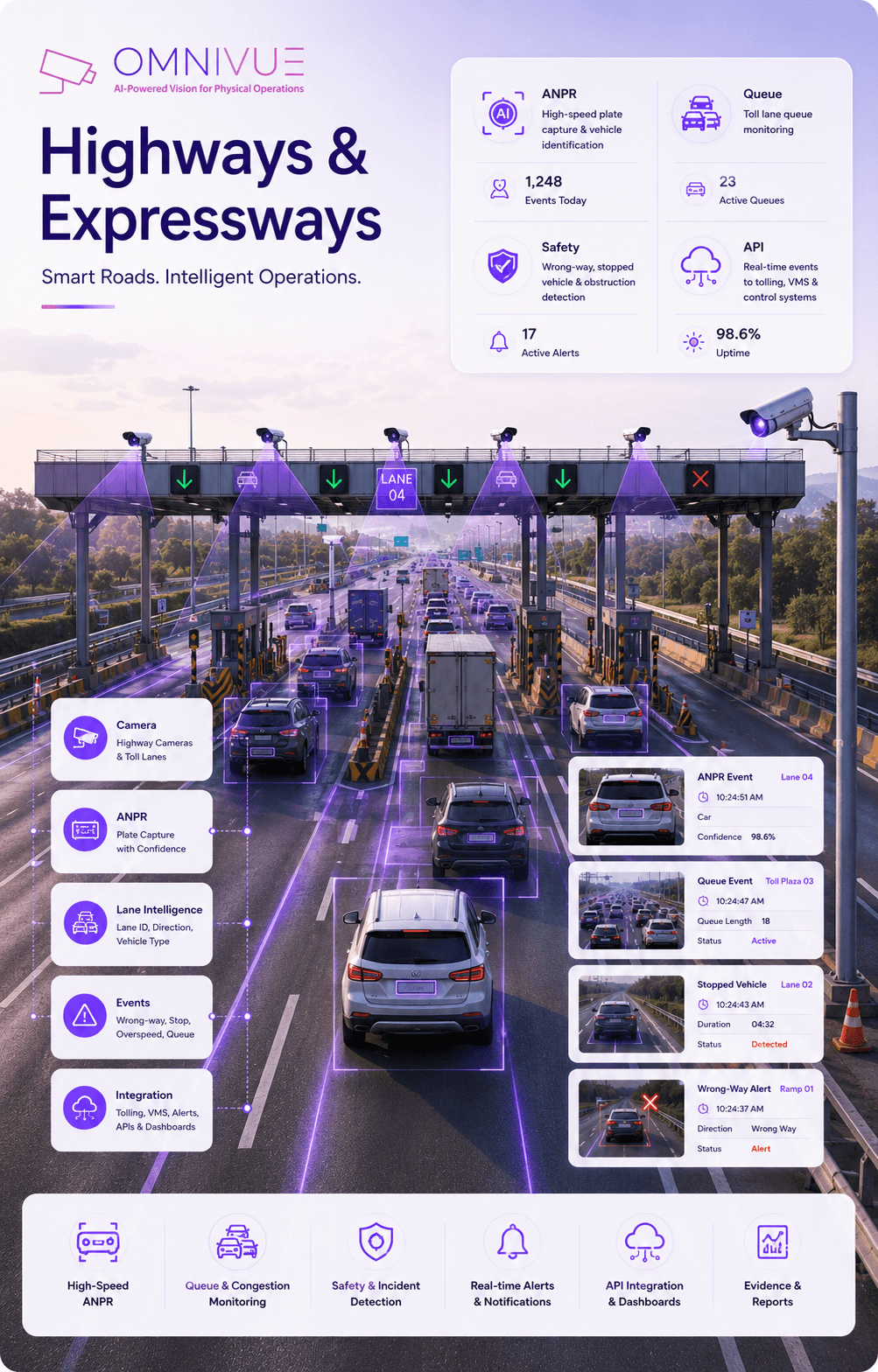
ANPR
High-speed events
Queue
Toll congestion
Safety
Road exceptions
API
System integration
Priority workflows
Highways need structured vehicle and safety intelligence, not only video footage.
Road operators, toll partners and infrastructure teams need reliable event records across high-speed lanes, toll points, gantries, checkpoints, service lanes and control-room workflows.
Core idea
Every vehicle or road-safety event should be linked to camera, lane, timestamp, location, evidence snapshot, event type and integration-ready data.
High-Speed ANPR
Capture vehicle number plates, lane ID, timestamp, vehicle snapshot and event evidence at highway and expressway points.
Toll Plaza Queue Monitoring
Monitor queue length, congestion, lane activity and toll plaza movement to support faster operational response.
Stopped Vehicle & Obstruction
Detect stopped vehicles, breakdown-like situations, lane obstruction and unauthorized parking in monitored zones.
Wrong-Way & No-Entry Alerts
Generate alerts when vehicles move against permitted direction, enter restricted lanes or violate defined movement rules.
Speed & Lane Intelligence
Support speed monitoring, lane-level event records and internal road movement review where suitable camera coverage exists.
Evidence & Command Center Reports
Create searchable event records with snapshots, camera details, lane context, timestamps and operational review data.
Operational gap
Highway cameras already exist. The missing layer is real-time vehicle, safety and operations intelligence.
Omnivue helps convert selected highway and toll camera feeds into actionable ANPR events, safety alerts, lane intelligence, evidence records, reports and integration-ready APIs.
High-speed ANPR is difficult to validate on generic systems
Highway and expressway conditions involve fast vehicles, multiple lanes, plate variation, lighting changes and camera angle constraints.
Toll and highway operations are spread across many points
Events may occur at toll lanes, gantries, entry-exit ramps, service lanes, checkpoints, maintenance zones and control points.
CCTV is often used after the incident
Manual video review slows down response when teams need structured event records, evidence snapshots and exception alerts.
Multiple systems need clean integration
Next-generation tolling and highway operations need AI events that can connect with tolling systems, VMS, dashboards, reports and APIs.
Recommended Omnivue stack
The highway page maps road operations to the right Omnivue modules.
Highway and expressway deployments can combine high-speed ANPR, queue monitoring, stopped vehicle alerts, no-parking detection, speed intelligence, worker safety and command-center workflows.
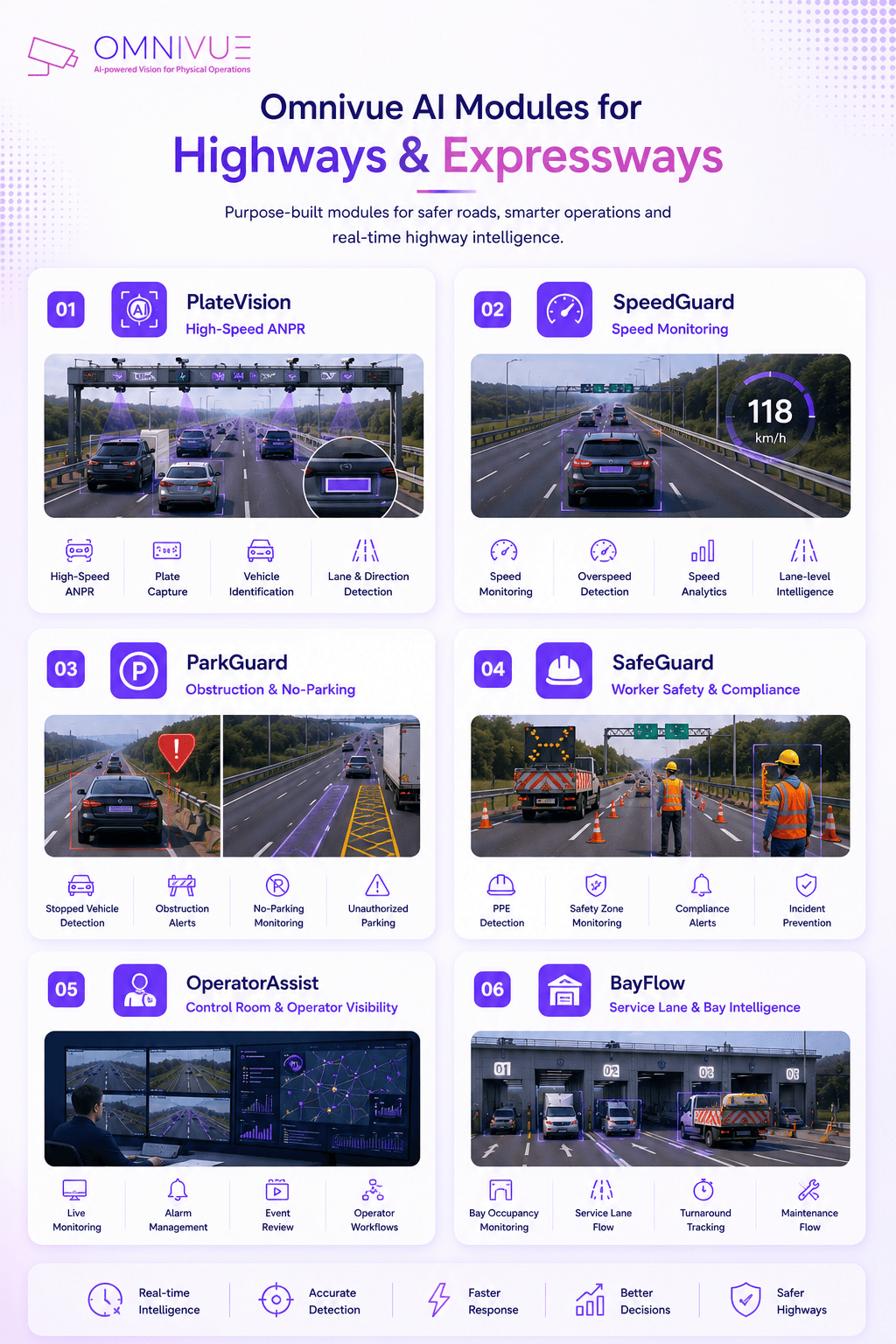
PlateVision
High-speed ANPR, vehicle recognition, lane records, plate crop, evidence snapshot and API-ready vehicle events
SpeedGuard
Speed monitoring, overspeed event review and lane-level movement intelligence for selected road zones
ParkGuard
Stopped vehicle, no-parking, obstruction and unauthorized waiting zone monitoring
SafeGuard
Worker PPE, highway maintenance safety, restricted-zone compliance and safety evidence
OperatorAssist
Control room, toll booth, operator desk and response workflow visibility
BayFlow
Service lane, maintenance bay, inspection lane and vehicle flow monitoring for highway support facilities
Deployment zones
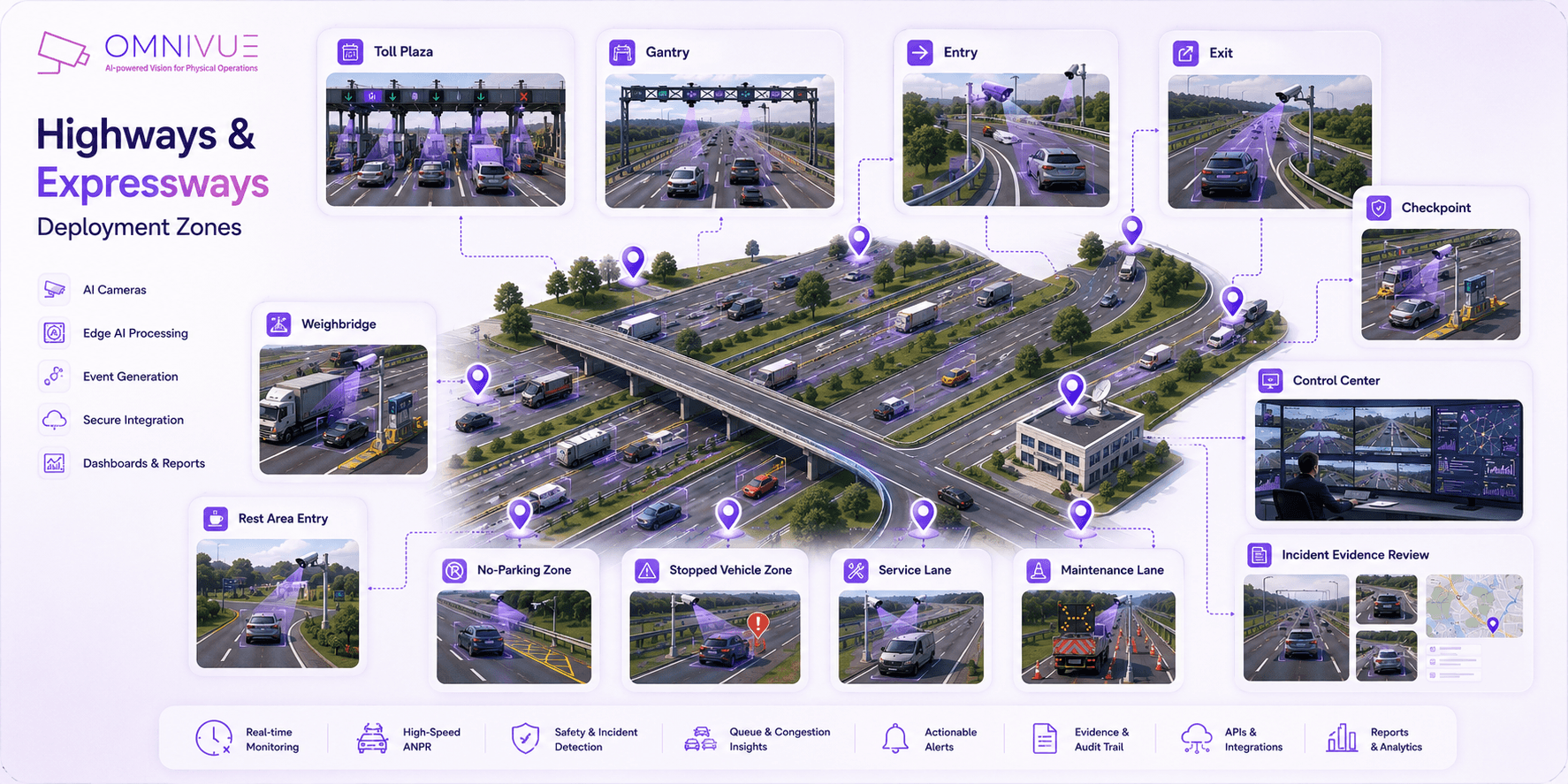
Map AI workflows around real highway infrastructure points.
Each road point can have different rules: ANPR at gantries, queue at toll lanes, stopped vehicle on shoulders, no-entry at restricted ramps, speed at selected lanes and evidence at incident review points.
Toll plaza lanes
Open-road tolling gantries
Expressway entry ramps
Expressway exit ramps
Highway checkpoints
Weighbridge approaches
Service vehicle lanes
Maintenance vehicle lanes
Highway patrol points
Rest-area entry and exit
No-parking and obstruction zones
Emergency shoulder monitoring zones
Wrong-way and no-entry points
Lane control and barrier points
Command center camera views
Incident evidence review points
Outcomes
What improves after deployment?
Support high-speed ANPR validation for highway and expressway use cases
Create structured vehicle event records with plate, lane, time and evidence
Improve visibility across toll lanes, gantries, checkpoints and entry-exit points
Detect stopped vehicles, obstruction, wrong-way movement and no-parking events faster
Support integration with tolling systems, VMS, APIs, dashboards and reports
Extend highway camera infrastructure into operational intelligence workflows
Fit & readiness
What should be planned first?
Camera and lane review
Review camera position, lens, height, angle, vehicle distance, lane coverage, lighting and plate visibility before validation.
Speed and condition testing
Validate with real highway or toll lane feeds across different speeds, vehicle types, day/night conditions and weather variation.
Event and evidence definition
Define what each event must include: plate crop, vehicle snapshot, lane ID, timestamp, confidence, camera ID and direction.
Integration ownership
Confirm whether events need to connect with tolling systems, VMS, command center, watchlists, alerts, reports or third-party APIs.
Implementation approach
A practical pilot path for highways, expressways and tolling partners.
The goal is not to replace the entire traffic or tolling system. The goal is to add an AI event layer over selected highway, toll, gantry, checkpoint and command-center camera views.
Highway use-case mapping
Identify whether the first deployment is for high-speed ANPR, tolling, queue, wrong-way, stopped vehicle, obstruction or safety monitoring.
Camera and feed validation
Connect selected highway or toll camera feeds and validate visibility, speed range, lane coverage and image quality.
Edge AI configuration
Configure PlateVision and relevant Omnivue modules for event generation, evidence snapshots, alerts and local processing.
Pilot review and integration
Review accuracy, exceptions, missed events, evidence quality, API payloads and rollout readiness with the highway operator or partner team.
Share your highway or tolling requirement. We’ll map the right PlateVision pilot.
Tell us your camera locations, lane count, vehicle speeds, tolling workflow, ANPR requirement, command-center setup, integration needs and reporting expectations. Omnivue can help design a practical highway AI video intelligence pilot.