How PPE Detection Improves Warehouse Safety Monitoring Without Replacing Existing Cameras
PPE detection can extend warehouse safety visibility by turning suitable existing camera feeds into structured events, evidence and review workflows—without assuming every camera can support every task or replacing frontline supervision.
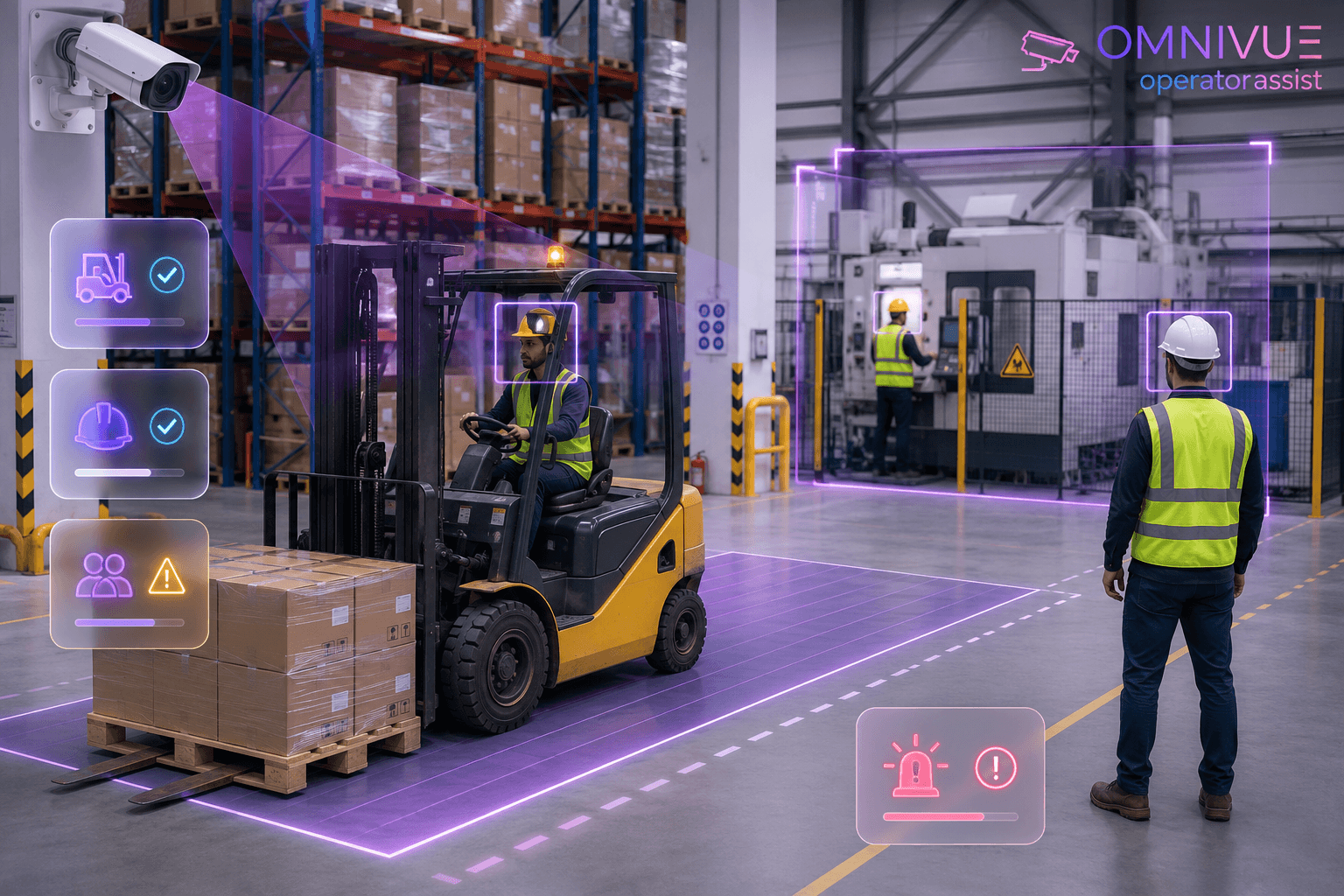
Warehouse safety programs usually do not fail because safety policies are missing. They fail because continuous observation is difficult.
A large warehouse may have multiple loading areas, active forklift routes, high pedestrian movement, storage aisles, staging zones and shift-based activity across long operating hours. Supervisors cannot be everywhere at once. Yet many of the most common safety risks are visual and repetitive: missing helmets, missing safety vests, entry into high-risk zones, obstructed emergency exits and unsafe interactions between people and equipment.
This is where PPE detection becomes useful. When deployed correctly, it allows suitable existing camera feeds to support a practical safety workflow: identify whether required protective equipment is visible, create an event, route the event to the appropriate team and preserve evidence for follow-up and review.
The goal is not to replace frontline supervision or turn the safety program into a generic alert engine. The goal is to improve coverage, consistency and response across known operational risk points.
For many organizations, the most important question is not whether AI can detect PPE in ideal lab conditions. The real question is whether existing warehouse cameras can support a reliable and useful workflow in the actual site environment.
In many cases, the answer is yes. But success depends on camera suitability, scene conditions, workflow design and operational discipline—not just model capability.
What PPE Detection Actually Solves
PPE detection is often described too narrowly, as if the only output that matters is whether a worker is wearing a helmet or vest. In reality, the larger operational value comes from turning repeated visual observations into a structured safety process.
A typical warehouse safety team is trying to solve a broader set of problems:
- How can we monitor multiple high-risk areas without relying entirely on manual rounds?
- How can we identify recurring non-compliance by location, shift or process area?
- How can we validate whether an alert is real and preserve evidence for coaching or escalation?
- How can we extend supervisory visibility to loading zones, forklift intersections, dispatch areas and emergency routes?
- How can we improve audit readiness without creating another manual paperwork burden?
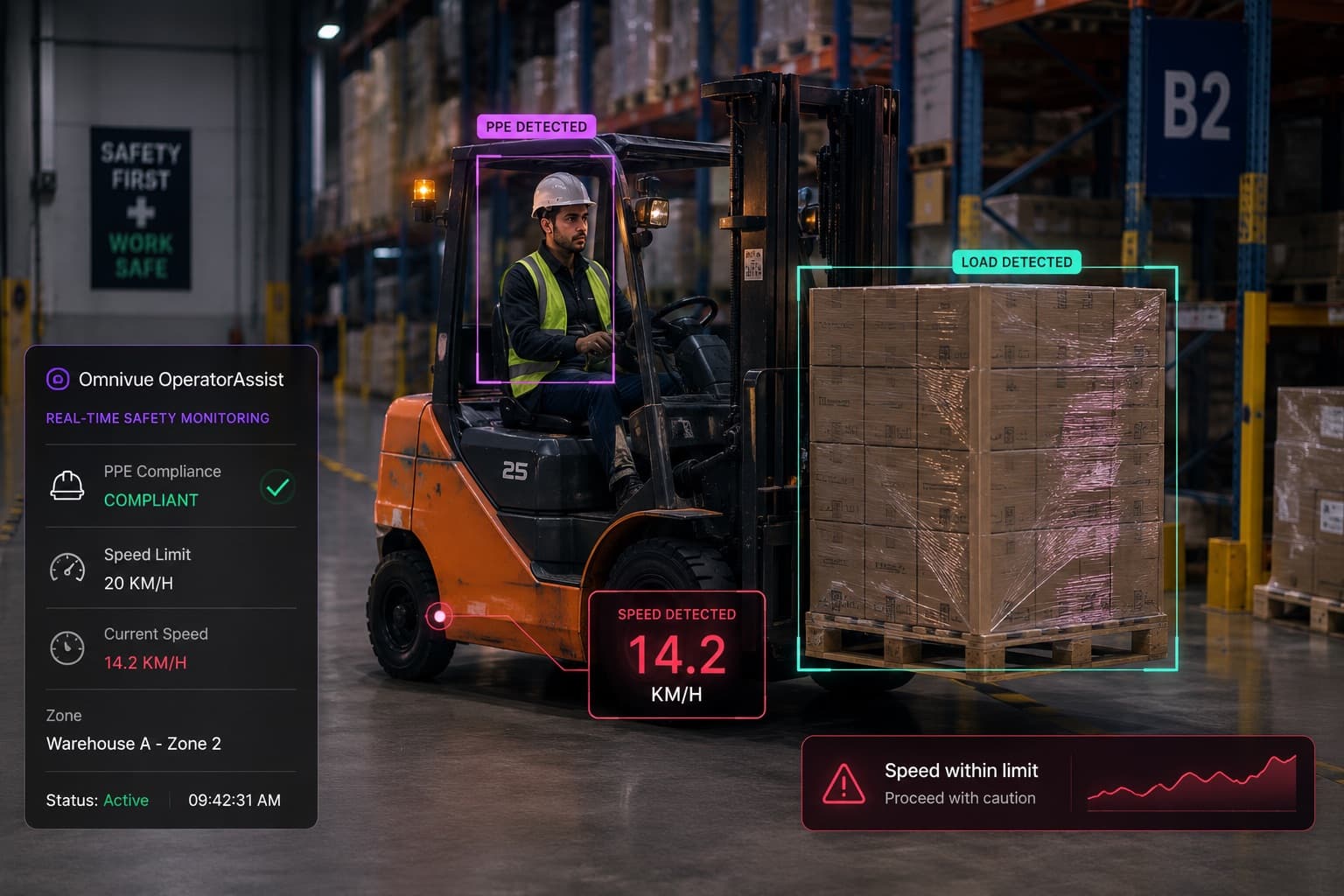
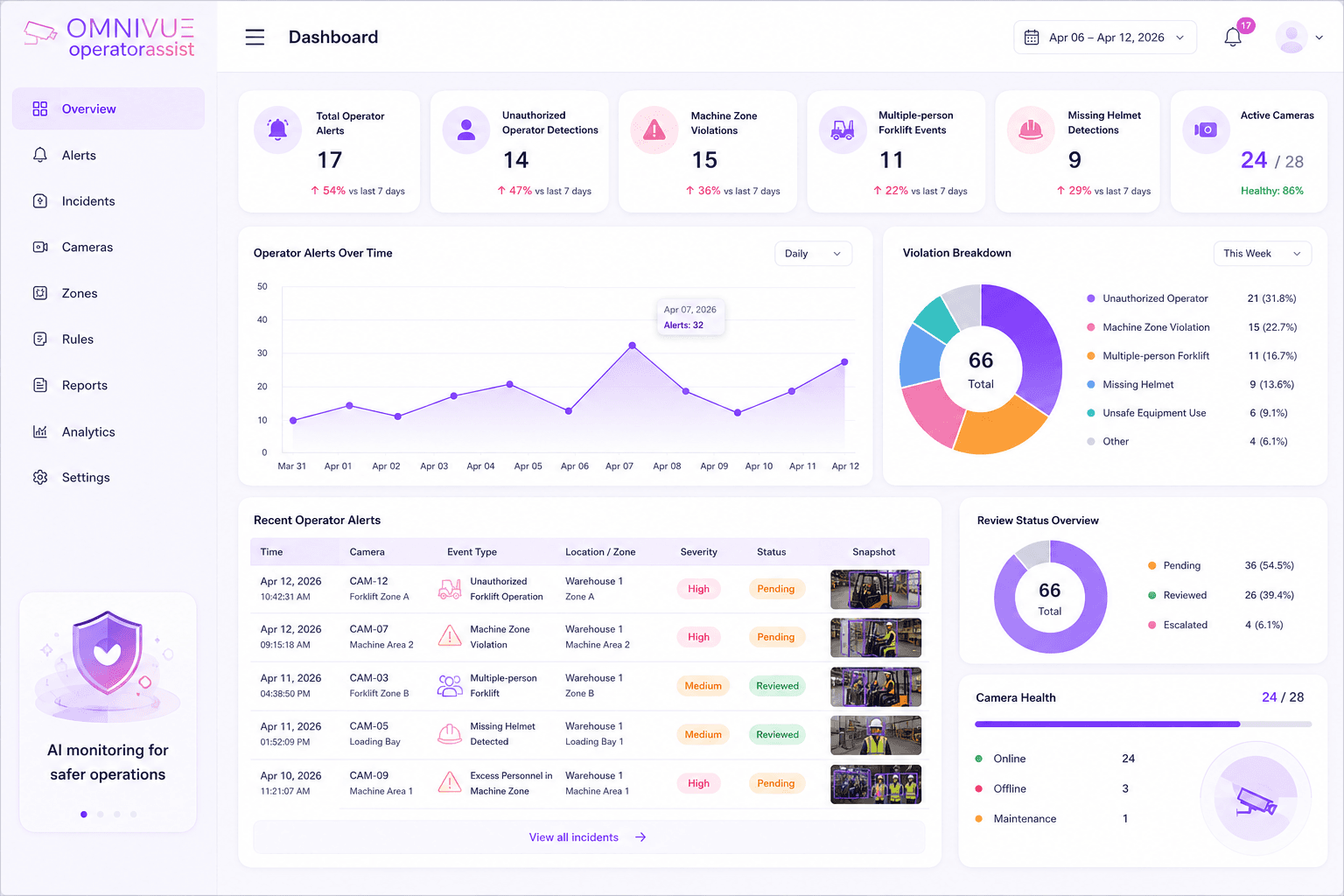
A camera-based PPE workflow can help answer these questions by adding consistency to visual monitoring. For example, when a worker enters a designated safety zone without a visible helmet or vest, the system can create a record, save an image or clip, alert the relevant team and mark the event for review.
The detection alone is not the outcome. The outcome is a clearer and faster path from observed risk to documented action.
Why Existing Cameras Are Often Good Enough to Start
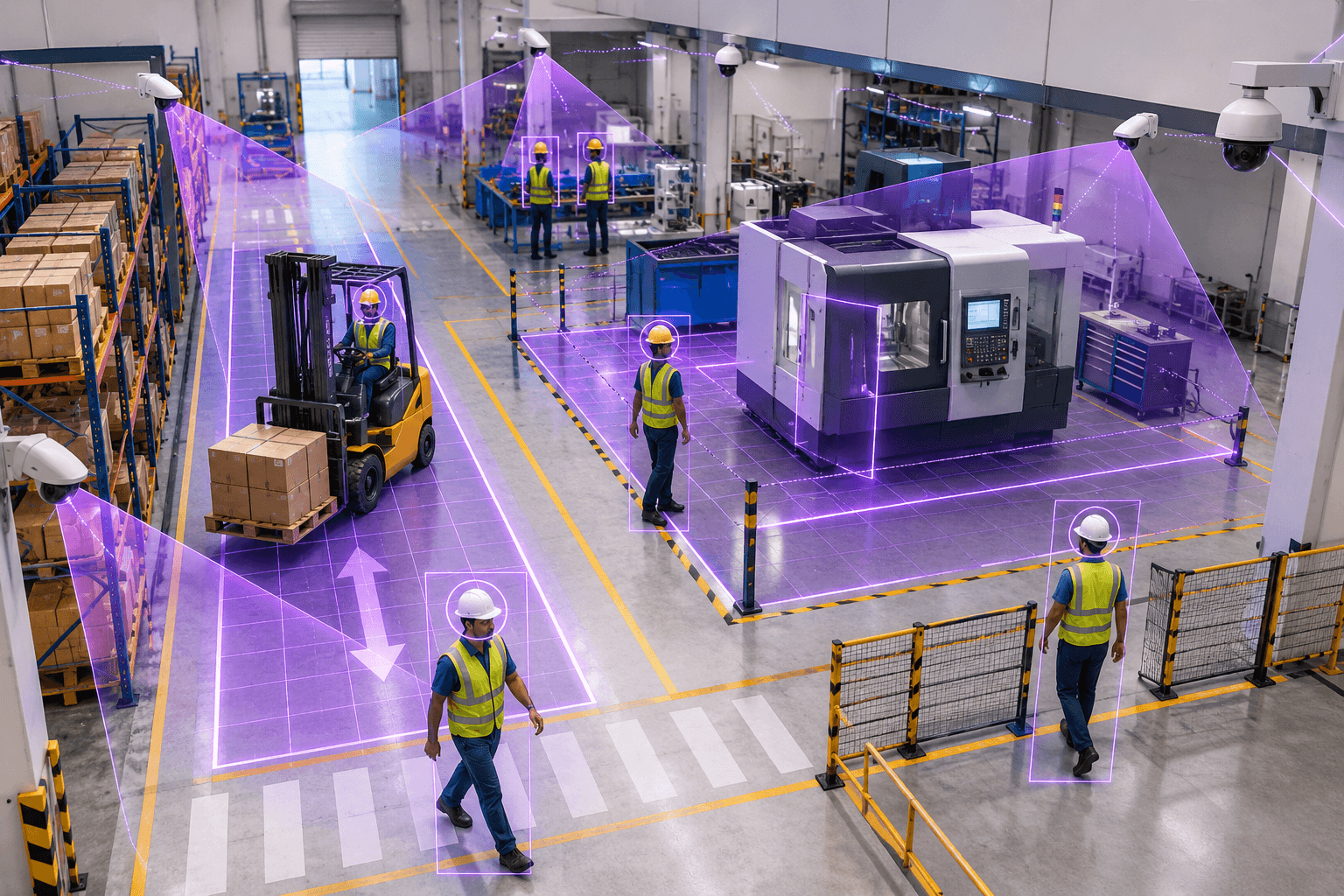
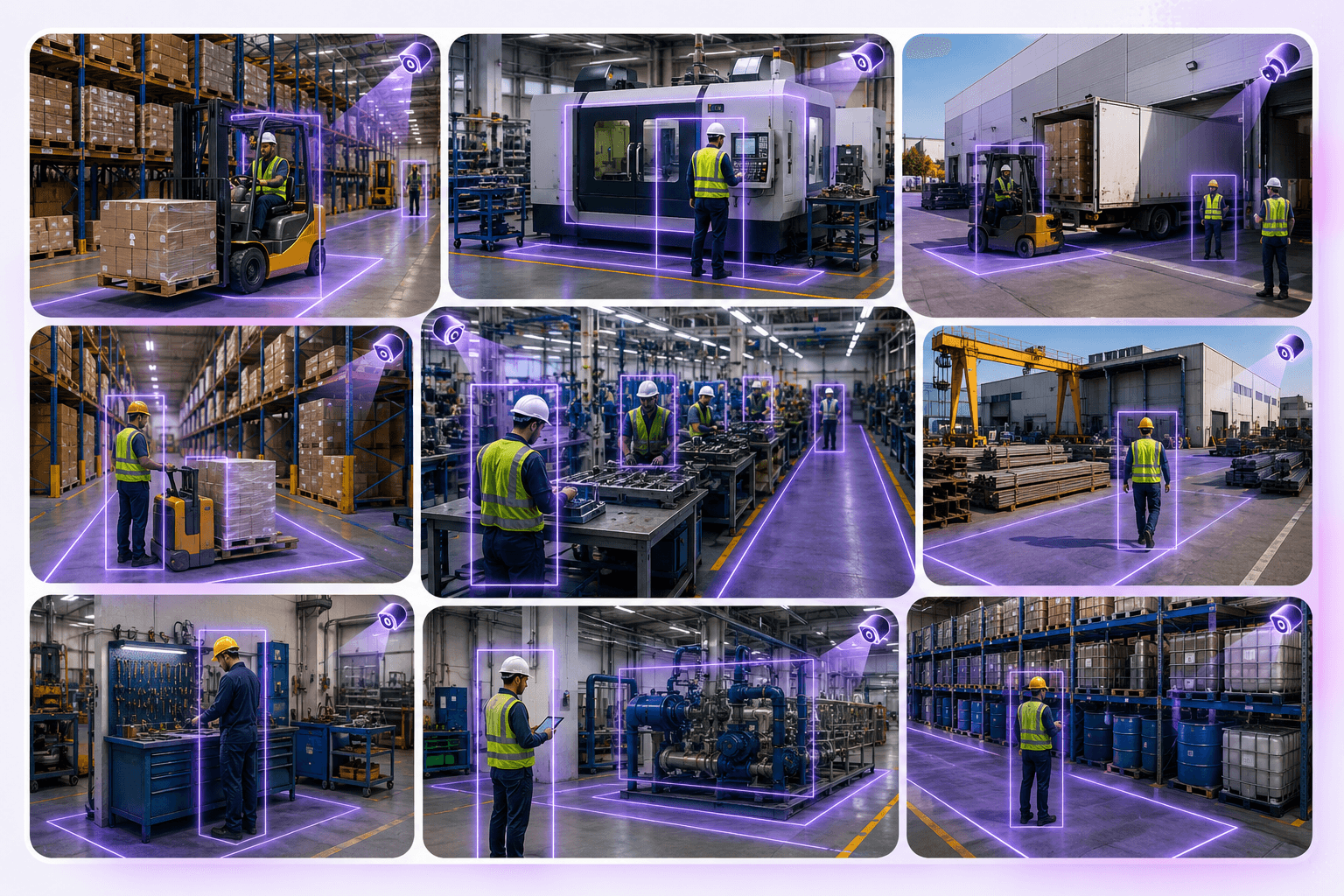
Many warehouses already have camera infrastructure covering gates, loading docks, aisles, staging areas, dispatch lanes and internal operational zones. These cameras were usually installed for security, compliance or investigation, not specifically for AI safety monitoring. Even so, some of them may already be suitable for PPE workflows.
That does not mean every camera is usable. A wide overhead view may help with movement or zone activity but may not capture enough detail to confirm whether a helmet or vest is present. A dock camera may perform well in daytime but lose consistency under low light or glare. A forklift lane camera may show unsafe proximity between vehicles and pedestrians while failing to support fine-grained PPE checks.
A credible deployment therefore starts with camera feasibility—not a blanket promise that every installed device can run every workflow.
Four Practical Conditions for PPE Detection
If a warehouse wants to reuse existing cameras for PPE monitoring, four conditions matter most:
1. Subject visibility
The required equipment must be visible in the image. If a helmet is often obscured, if workers appear too small in frame or if safety vests blend into low-contrast backgrounds, reliability will drop.
2. Camera angle and distance
A camera placed for broad surveillance may not provide enough detail for PPE verification. In many cases, cameras positioned at entry points to high-risk areas or at predictable pedestrian paths perform better than cameras attempting to cover an entire warehouse floor.
3. Lighting consistency
Warehouses often contain mixed lighting, shadowed aisles, loading-bay backlight and reflective surfaces. A feasibility check should confirm that the target subject remains visible across the operating day.
4. Workflow relevance
The best PPE monitoring locations are not random. They are the points where the observation can trigger a useful next step: a loading zone, a forklift operating area, a restricted operational bay or a dispatch lane where supervisors can respond quickly.
Move From Detection to Safety Workflow
The mistake many teams make is to think of PPE detection as a feature rather than a workflow. A feature answers the question, “Can the model recognize a helmet?” A workflow answers the more important question, “What should happen if a required item is not visible in a defined area?”
In a warehouse environment, a practical workflow may look like this:
- A worker enters a high-risk zone covered by a suitable camera.
- The system checks whether required PPE is visible.
- A non-compliance event is created if the rule is not satisfied.
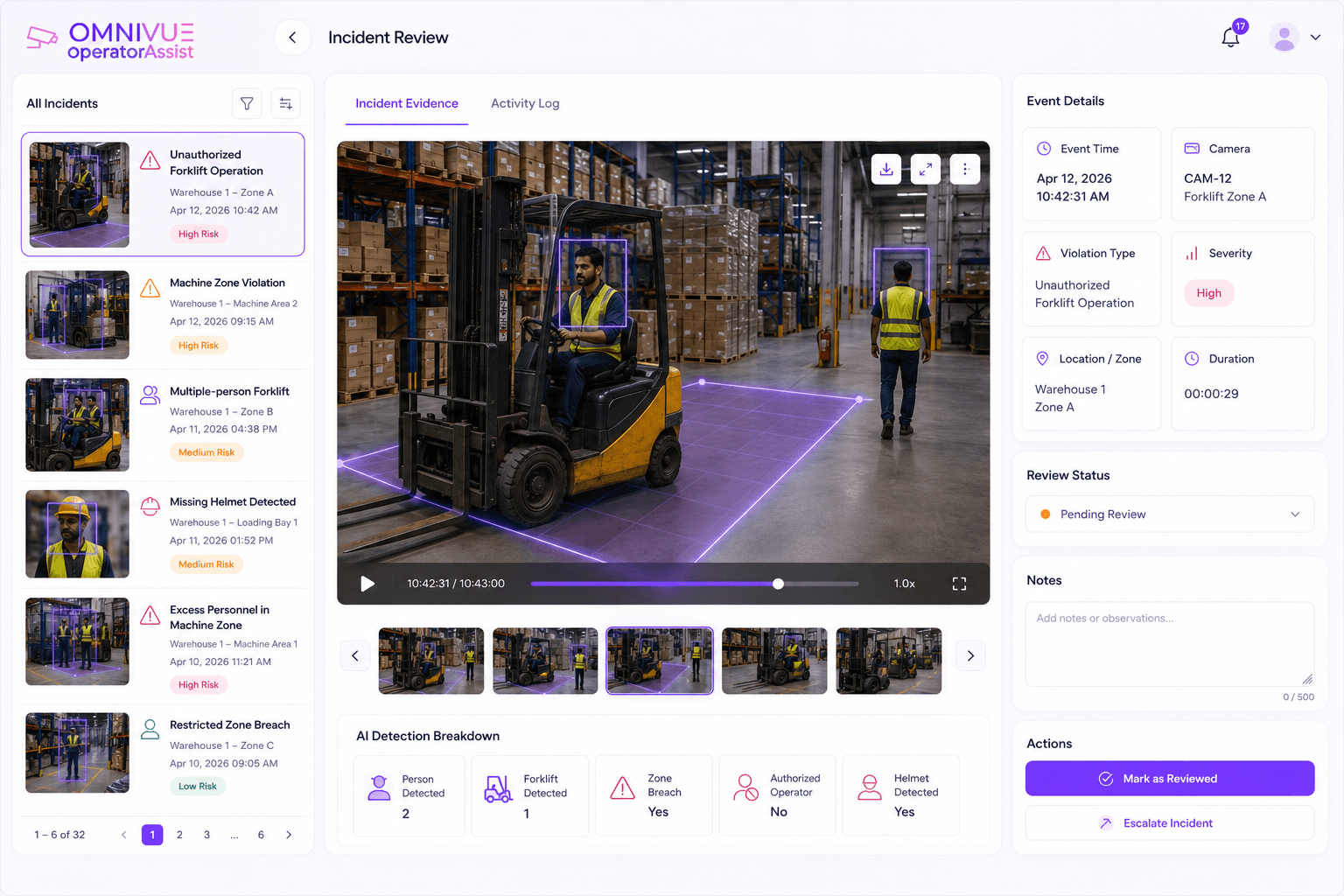
- The event includes timestamp, location, evidence image and review status.
- A supervisor or safety officer receives the alert or reviews the queue of open events.
- The event is acknowledged, verified and used for coaching, corrective action or trend analysis.
This design matters because it keeps the system grounded in real operations. It also helps distinguish between raw detections, verified events and actionable issues.
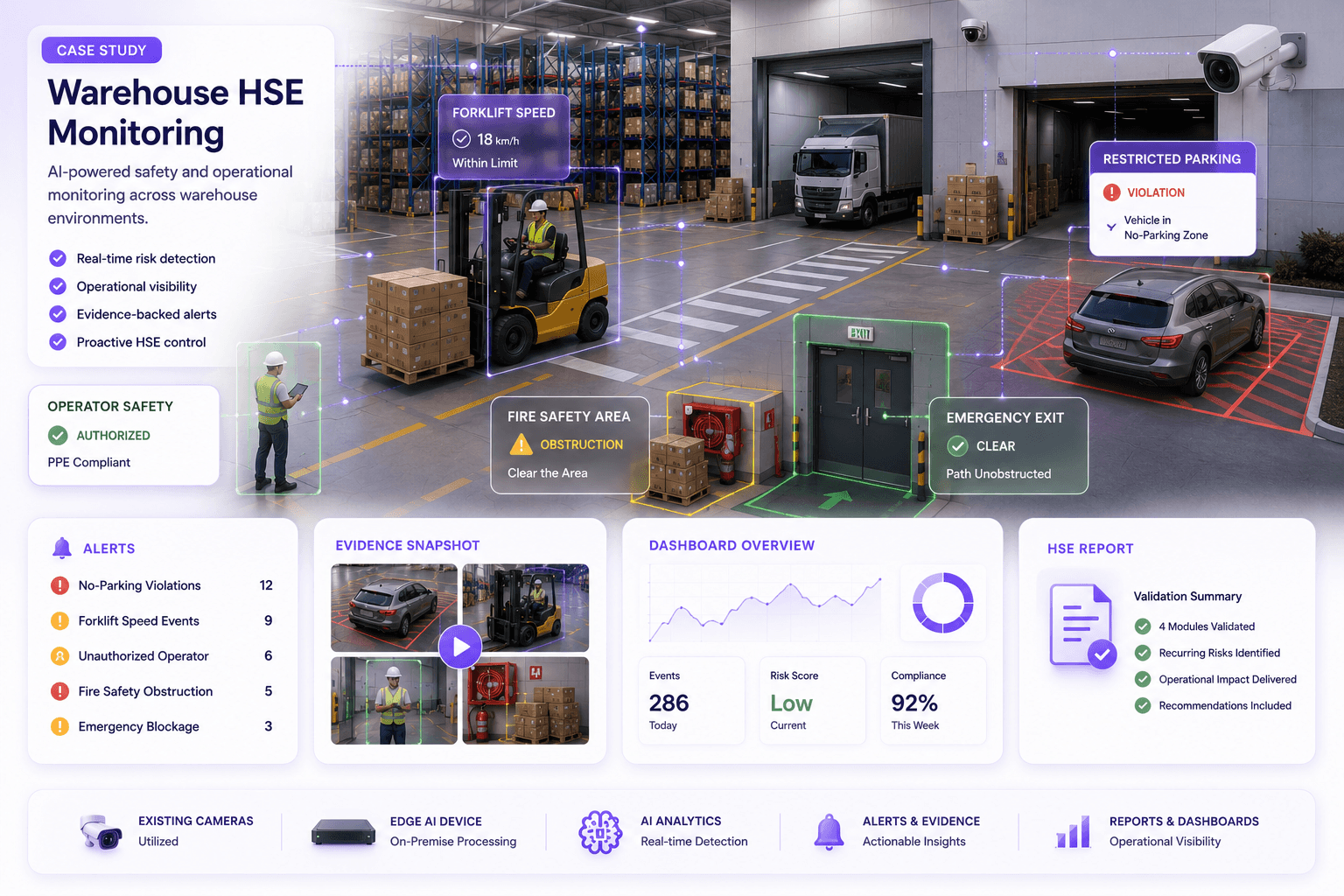
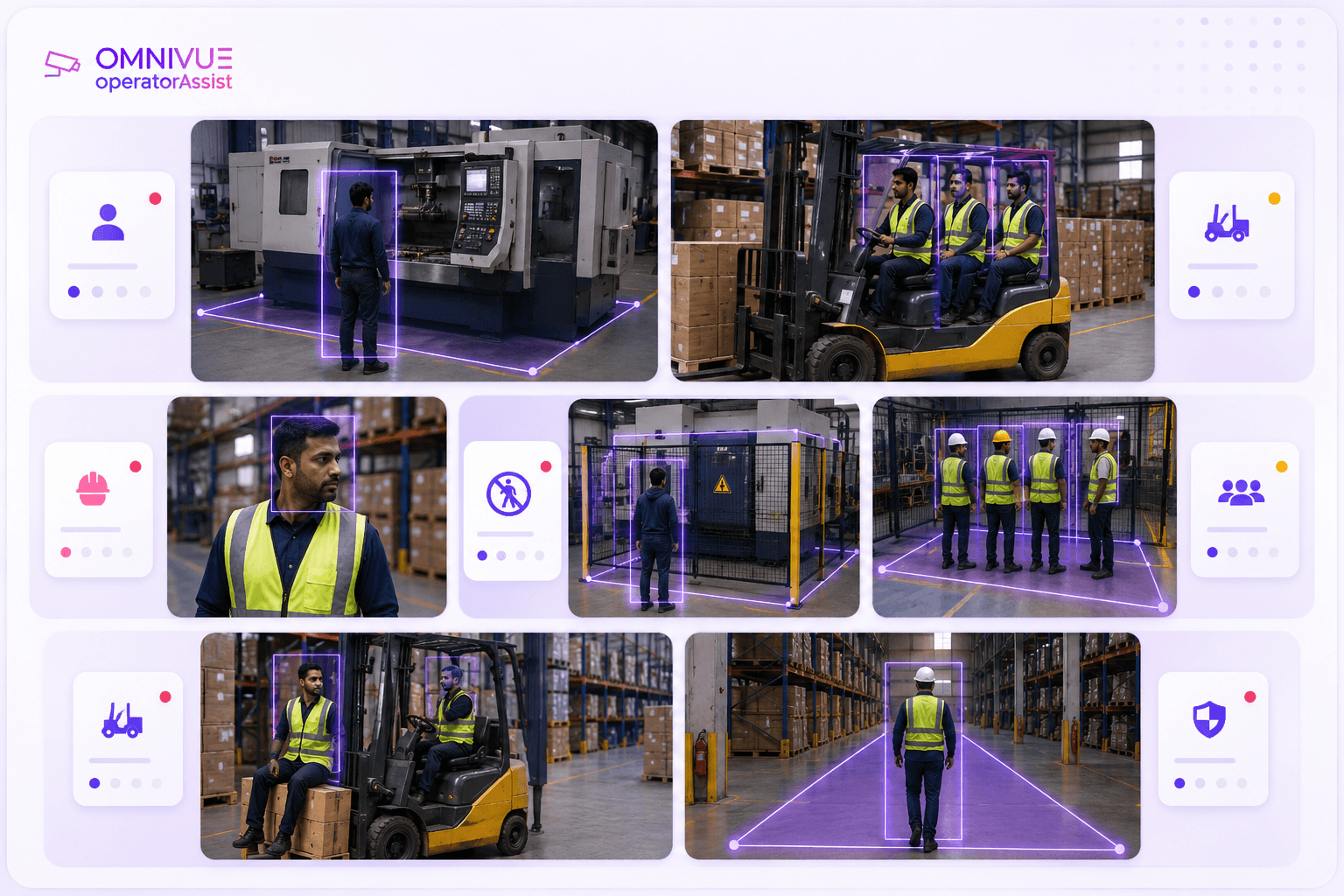
The same platform can often extend beyond PPE to adjacent safety workflows such as forklift-risk zones, emergency-exit monitoring, pedestrian-lane compliance, no-parking enforcement in operational areas or restricted-zone access.
Where PPE Detection Creates the Most Value in Warehouses
Not every part of a warehouse needs AI monitoring from day one. The most useful starting points are usually the zones where risk is recurring, visibility matters and action can follow quickly.
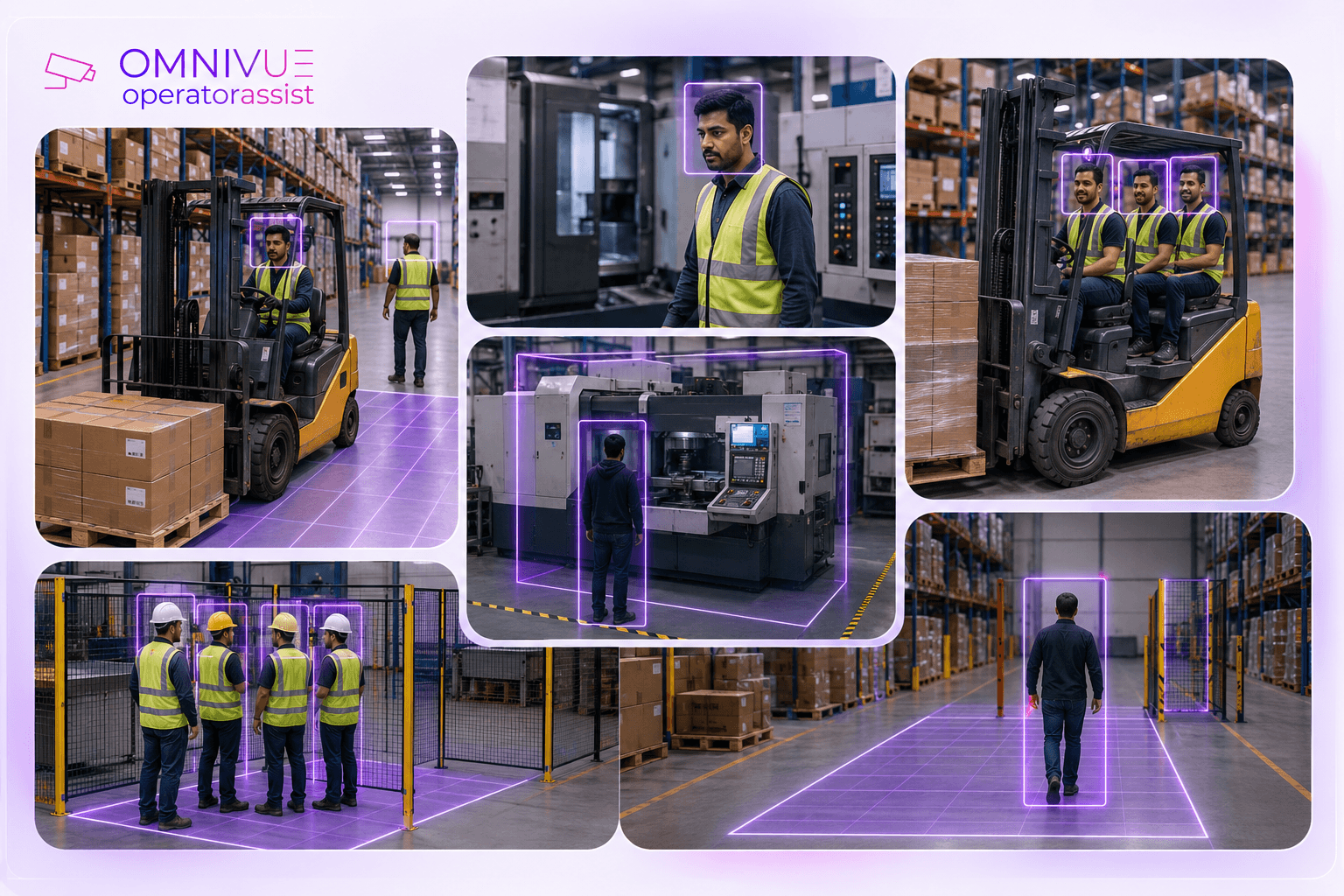
Forklift operating zones
- Identify workers entering active equipment areas without required PPE
- Support broader awareness around pedestrian–forklift interaction risk
- Provide evidence for coaching and near-miss review
Loading and dispatch areas
- Monitor whether workers entering loading areas are visibly compliant
- Track repeated exceptions by shift or location
- Improve supervisory coverage where activity levels fluctuate throughout the day
Restricted operational zones
- Check for required equipment before entry into defined zones
- Preserve evidence where manual monitoring is inconsistent
- Support audit trails for safety review
Emergency and compliance-sensitive areas
- Combine PPE checks with emergency-exit obstruction monitoring
- Monitor operational discipline around fire exits and safety pathways
- Maintain evidence for inspection or incident follow-up
What Buyers Should Evaluate Before Deployment
A serious AI safety project should be evaluated the same way any operational technology initiative would be evaluated: by workflow usefulness, not by a generic model claim.
Enterprise buyers should ask at least the following questions:
- Which warehouse zones will be monitored first, and why were those zones selected?
- Are the current cameras suitable in terms of angle, image detail and lighting?
- What specific PPE classes are required in the target area?
- How will non-compliance events be reviewed and by whom?
- What evidence will be stored with each event?
- How will false or irrelevant events be handled?
- Will the deployment run at the edge, on-premise, in the cloud or in a hybrid model?
- What operational metrics will determine pilot success?
These questions help prevent the project from becoming an isolated technical demonstration. They also keep the focus on adoption and measurable value.
Common Reasons PPE Monitoring Projects Underperform
When warehouse AI projects disappoint, the cause is usually not mysterious. A few patterns appear repeatedly:
- The camera was never suitable for the target task.
- The system was deployed without clarifying what counts as a verified event.
- Alerts were sent without ownership, review discipline or escalation logic.
- The deployment tried to cover too many areas before validating one workflow properly.
- The project promised “full safety automation” instead of targeted operational support.
- No one defined how the results would be measured beyond raw detection counts.
These are avoidable problems. A narrower, better-governed pilot usually creates a better foundation for expansion than an ambitious but poorly structured initial rollout.
A Practical Pilot Approach
For warehouses considering PPE detection, the smartest first step is usually a controlled pilot focused on one or two clearly defined risk areas.
A practical pilot should define:
- The selected cameras and monitored zones
- The specific PPE rules for those zones
- The hours and conditions under which the pilot will be evaluated
- How events will be reviewed and verified
- Whether related workflows such as forklift-risk zones or emergency-exit monitoring are included
- The architecture model: edge, on-premise or hybrid
- The operational metrics to be tracked
Typical pilot measures may include: number of verified PPE events, event relevance, response time, recurring high-risk locations, supervisor usability and whether the evidence supports corrective action.
The most useful pilot outcome is not “the model ran.” It is a clear decision about whether the workflow is useful enough to scale.
How to Measure Success
A warehouse safety workflow should be judged by practical outcomes, not by alert volume alone. Useful measures may include:
- Verified PPE non-compliance events by location or shift
- Reduction in manual monitoring burden for supervisors
- Time from event creation to review or acknowledgment
- Trends in recurring violations across high-risk zones
- Evidence availability for audit, training or incident follow-up
- Expansion readiness for adjacent safety workflows
These measures help organizations determine whether the system is becoming part of the operating rhythm rather than remaining a passive dashboard.

Why This Matters for Existing Camera Strategies
Many enterprise teams assume that AI safety monitoring requires a complete camera refresh. In practice, that is often unnecessary. The more responsible approach is to evaluate what can be reused, what needs repositioning and where a targeted camera change would materially improve the workflow.
This is especially important in warehouses, where camera infrastructure already exists for security and investigation. A selective upgrade strategy is often more practical than a full rip-and-replace proposal.
Use suitable existing infrastructure where it supports the workflow, then improve only where the evidence justifies it.
From Visibility to Safer Operations
PPE detection is not a substitute for safety culture, supervisor judgment or operational training. But it can extend visibility, improve consistency and help safety teams act on what cameras already observe.
When designed properly, the workflow is straightforward: identify the relevant area, assess camera suitability, define the rule, preserve the evidence and route the event to the people who can respond.
For warehouses trying to improve compliance, coverage and auditability without overhauling the entire camera estate, that is a practical and financially realistic path forward.
Warehouse safety workflow review
Request a Warehouse Safety Workflow Review
Omnivue helps enterprises evaluate existing warehouse camera infrastructure for practical safety workflows such as PPE monitoring, forklift-risk zone intelligence, emergency-exit monitoring and restricted operational zone compliance. A workflow review can help determine which cameras can support PPE detection today, where repositioning or lighting improvements may be needed, which warehouse zones are best for an initial pilot, whether edge, on-premise or hybrid deployment is appropriate and how events should be reviewed, recorded and escalated.