The Business Case for ANPR and Parking Automation: Costs, Savings and ROI
ANPR ROI is not created by reading plates alone. It comes from reducing manual handling, improving lane throughput, enforcing parking rules consistently, protecting revenue and creating reliable vehicle records. This guide shows how to build a practical business case without relying on inflated assumptions.
ANPR is often evaluated as a camera feature. That is usually the wrong starting point.
The camera may capture a number plate, but the financial return comes from the workflow that follows: vehicle identification, permit validation, parking entitlement, tariff calculation, access decisions, exception handling, evidence and reporting.
A plate read by itself does not reduce operating cost. A connected vehicle workflow can.
For parking operators, residential communities, commercial buildings, campuses, logistics facilities and mixed-use developments, the business case typically rests on five areas: labour efficiency, vehicle throughput, revenue assurance, compliance and auditability, and the cost of managing exceptions.
This article provides a practical framework for evaluating those areas without assuming that automation removes every manual task or that every site will achieve the same return.
What ANPR and Parking Automation Actually Automate
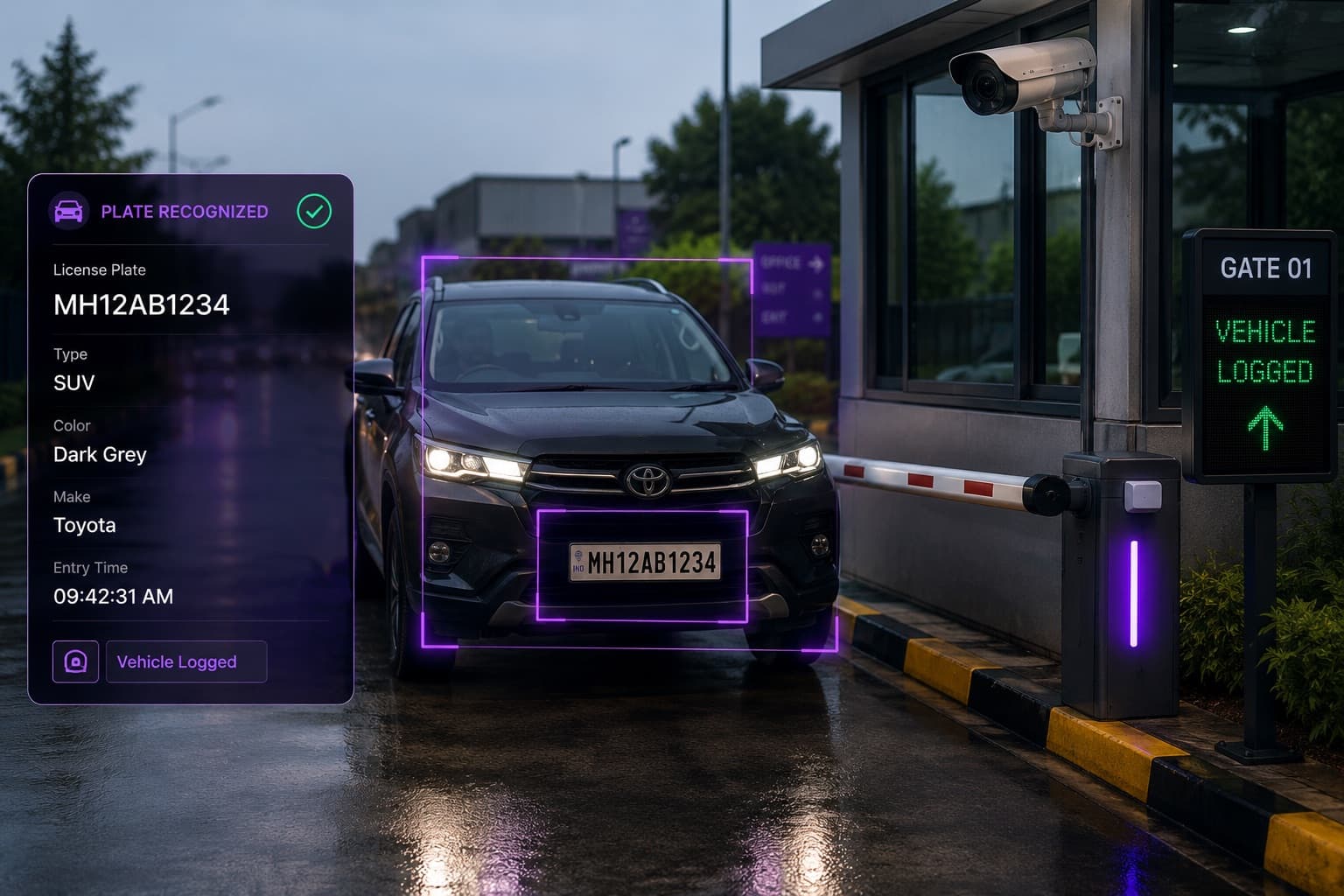
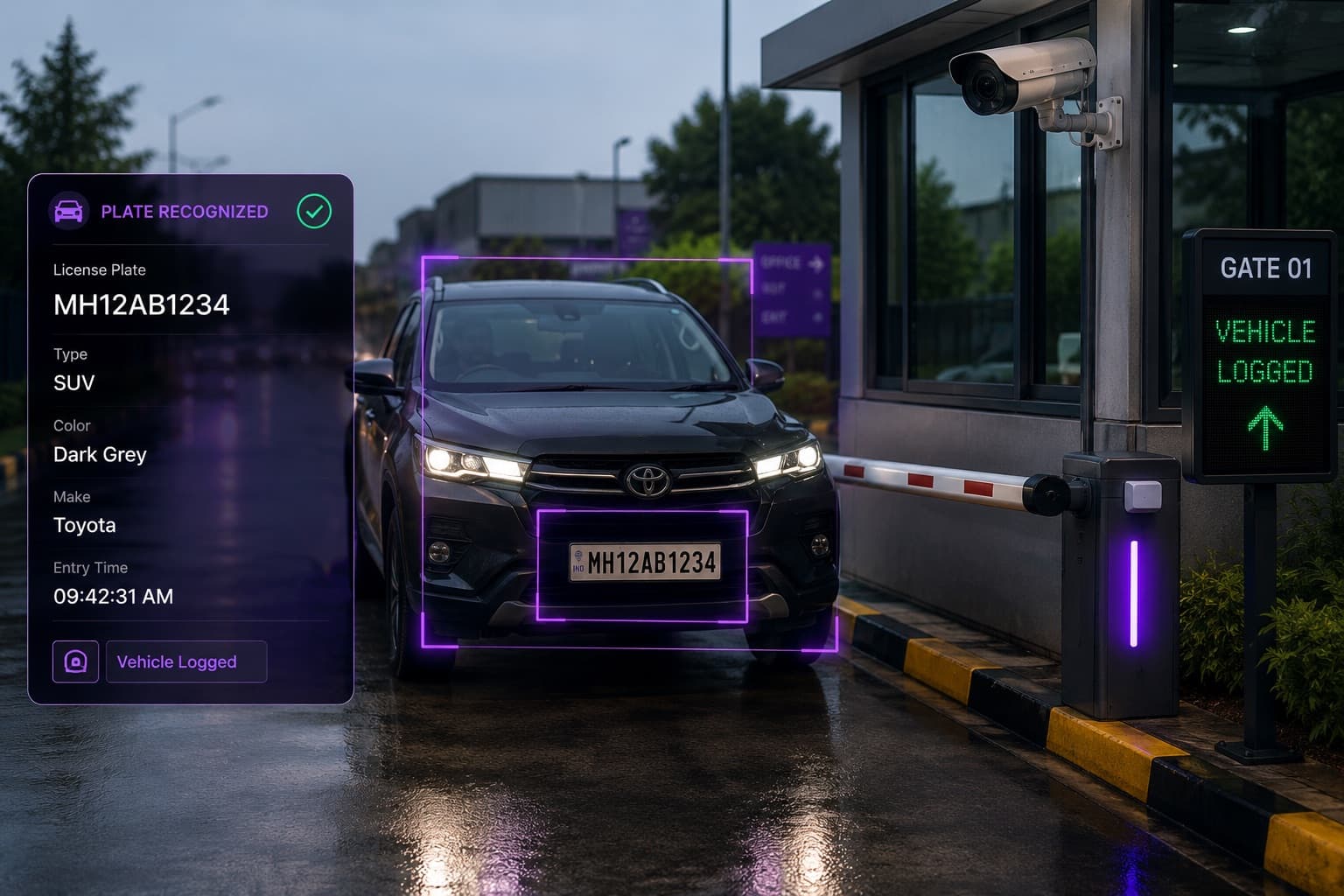
ANPR - also called ALPR or license plate recognition - converts a visible plate into structured vehicle data. Parking automation uses that event as an input to a larger process.
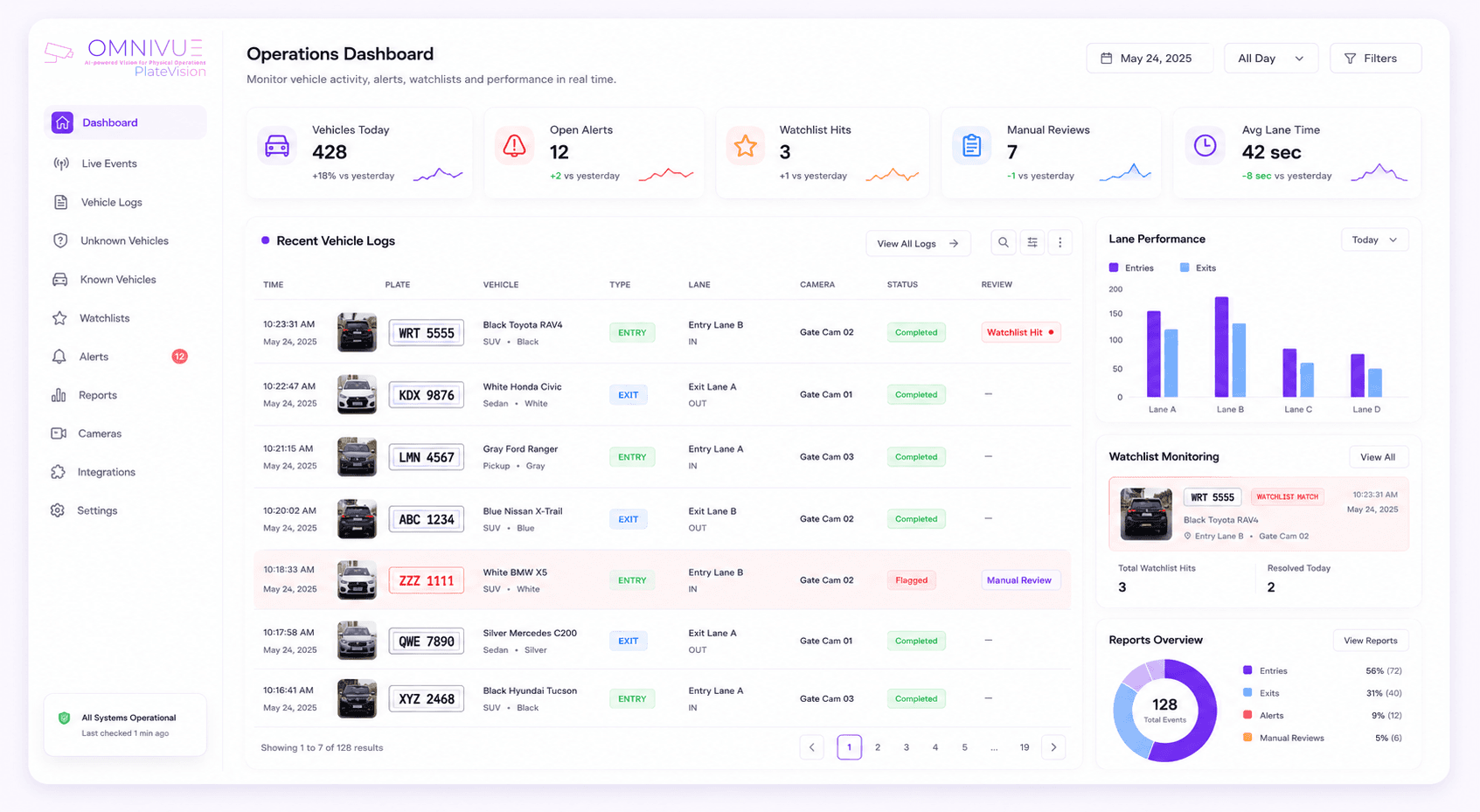
Depending on the site, the workflow may include:
- Detecting a vehicle at entry or exit
- Reading the license plate
- Matching the vehicle against resident, employee, visitor, contractor, tenant or watchlist records
- Checking time-based access permissions
- Applying parking tariffs, grace periods or subscriptions
- Opening a barrier or routing the vehicle for manual review
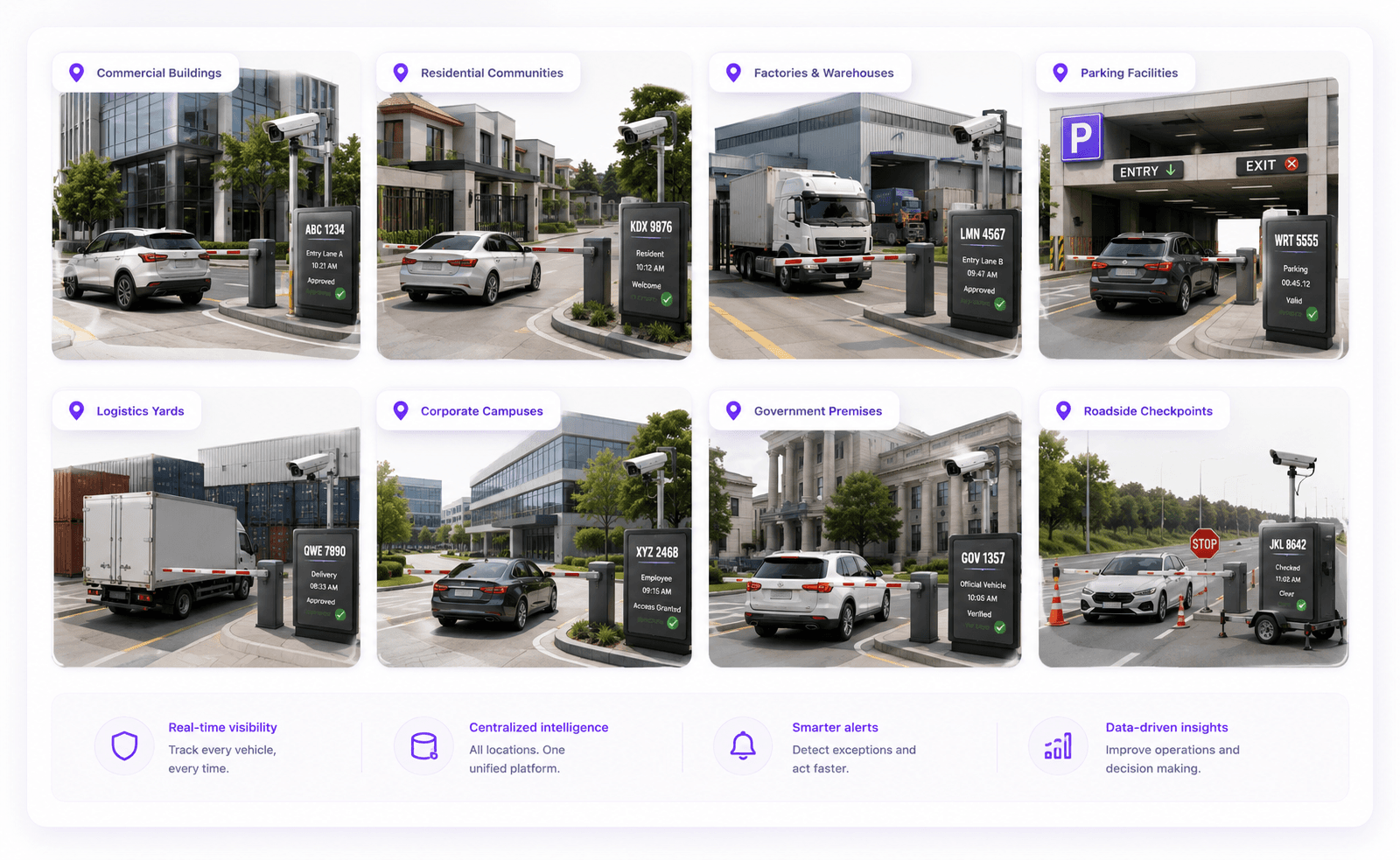
- Recording entry and exit evidence
- Flagging overstays, repeated exceptions or unmatched exits
- Producing occupancy, utilization and revenue reports
The value comes from reducing uncertainty and manual handling across this chain. If plate recognition is deployed without reliable rules, integrations and exception procedures, the organization may gain another data source without gaining an operational improvement.
The Five Main Sources of ROI
1. Reduced manual processing
Manual vehicle access often requires a guard, parking attendant or receptionist to inspect a sticker, call a resident, verify a visitor, record a plate or issue a paper ticket.
Automation can reduce the number of routine interactions that require staff attention. The relevant measure is not simply headcount reduction. It is the number of staff minutes recovered from repetitive checks and redirected toward security, customer service or exception management.
Useful baseline measures include:
- Average manual handling time per vehicle
- Vehicles handled per shift
- Number of lanes and operating hours
- Time spent issuing or reconciling temporary passes
- Time spent searching for entry and exit evidence
- Overtime or peak-hour staffing used to manage queues
2. Higher lane throughput and shorter queues
At busy entrances, the cost of delay appears as vehicle queues, resident complaints, delivery disruption, blocked roads, slower visitor processing and additional guards deployed during peaks.
ANPR can improve throughput when the camera view is suitable, the plate is captured early enough, the access rule is available quickly and the barrier response is reliable.
Measure:
- Average vehicle-processing time before automation
- Average processing time after automation
- Peak vehicles per fifteen minutes or per hour
- Queue length and duration at peak periods
- Percentage of vehicles routed to exception handling
- Number of barrier reversals, re-reads or manual interventions
Throughput improvements are operationally valuable even where they do not produce a direct cash saving. In a residential community, faster entry can improve resident experience. In a warehouse or commercial site, it can reduce delivery delays and vehicle congestion.
3. Revenue assurance and leakage reduction
For paid parking, the largest upside may not be labour. It may be the ability to match entries, exits, permits, payments and exceptions more consistently.
Revenue leakage can occur through:
- Lost or shared tickets
- Unrecorded manual entries
- Incorrect grace-period handling
- Vehicles exiting without a matched payment event
- Unauthorized use of reserved or subscriber parking
- Poor reconciliation between entry, exit and payment systems
- Manual overrides without sufficient audit trails
- Unbilled overstays or incorrectly applied tariffs
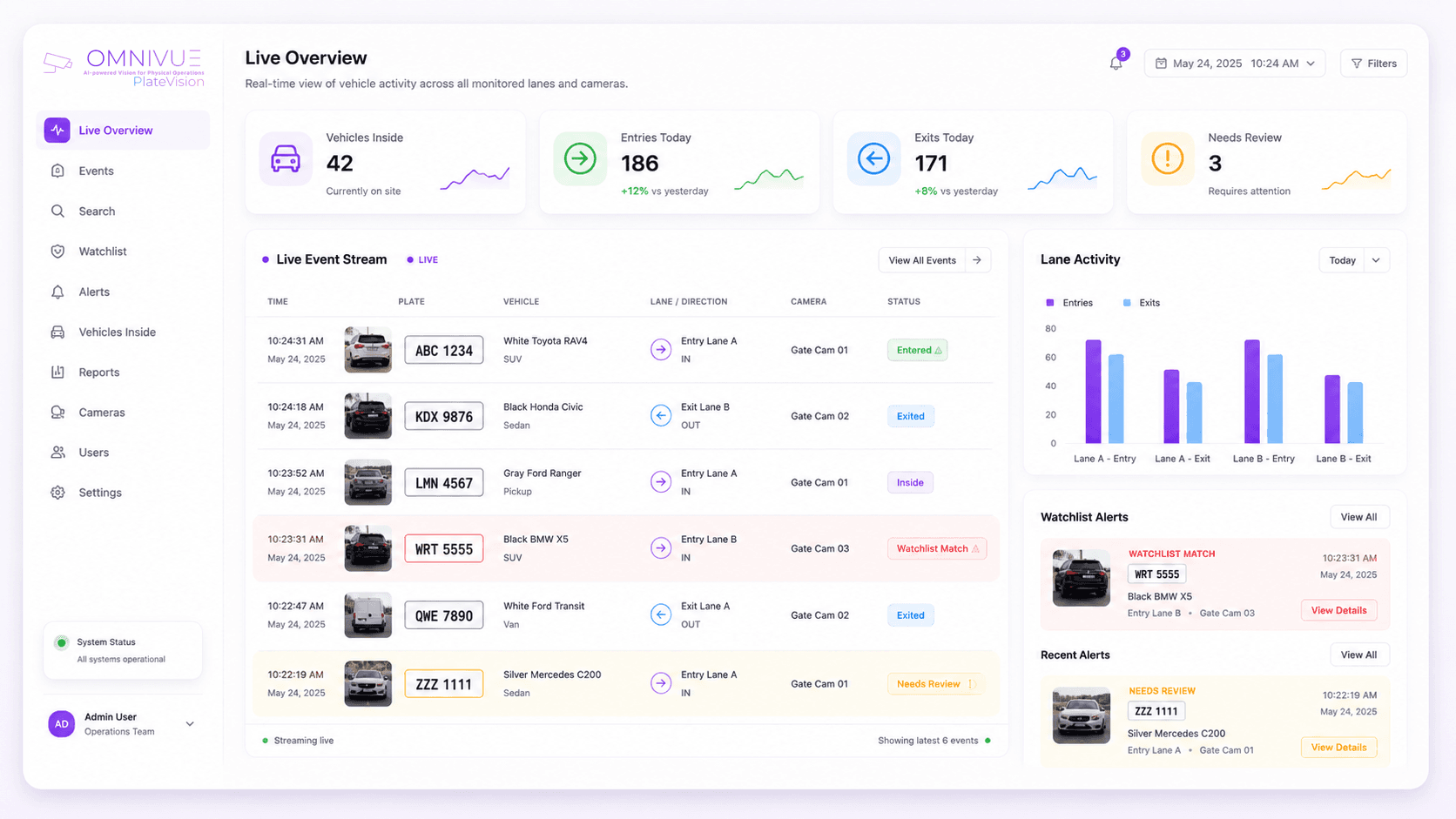
ANPR provides an independent vehicle event that can be reconciled against the parking-management or payment record. The value is strongest when the system can identify exceptions and route them for review rather than merely collecting more plate data.
The largest return may come from revenue assurance, not labour reduction.
4. Better permit and access compliance
Many sites operate with permits, stickers, access cards, spreadsheets or guard knowledge that becomes difficult to maintain as vehicle populations change.
A connected plate-based workflow can help enforce:
- Resident and employee vehicle permissions
- Visitor validity windows
- Contractor schedules
- Tenant-specific parking allocations
- Blocked or watchlisted vehicles
- No-entry periods
- Repeat-entry or anti-passback rules
- Reserved parking or subscription entitlements
The measurable value may include fewer unauthorized entries, fewer disputes, reduced manual permit checks and more reliable records. For high-security sites, the control benefit may matter more than a short financial payback period.
5. Faster investigation and stronger auditability
When vehicle records are incomplete, staff may spend significant time reviewing video, checking handwritten logs or reconciling multiple systems after an incident or complaint.
A structured ANPR event can combine:
- Plate number
- Vehicle image
- Entry or exit timestamp
- Lane and camera
- Access or payment decision
- Matched account or permit
- Operator intervention
- Reason for override
- Supporting image or video clip
The ROI is the reduction in investigation effort and the improvement in evidence quality. This is especially relevant for disputed charges, unauthorized access, damaged barriers, security incidents and repeated policy violations.
Build the Cost Side Honestly
A credible ROI analysis must include more than the software license.
Depending on the site, project cost may include:
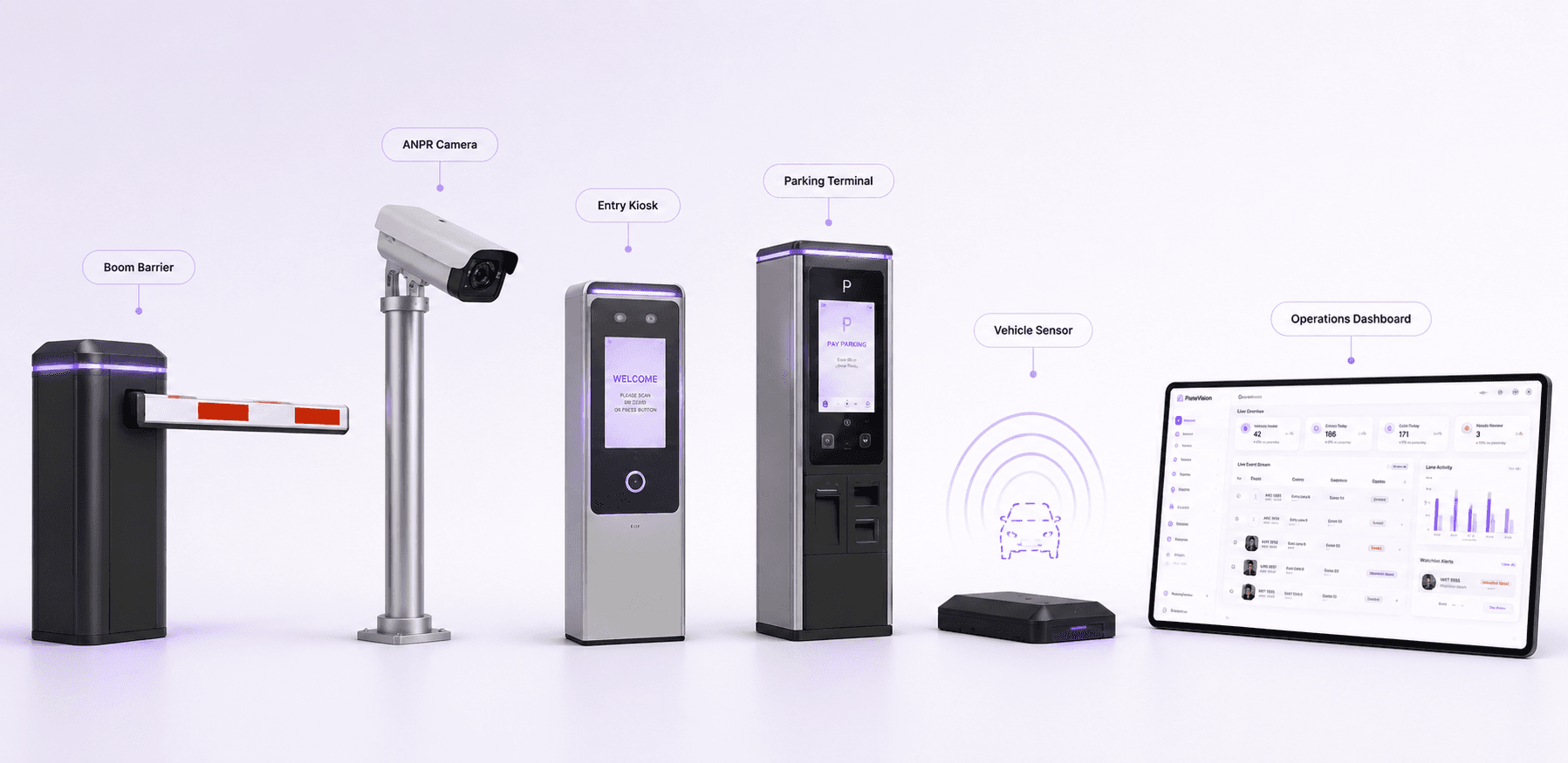
- ANPR or AI video intelligence software
- Edge, on-premise or cloud processing infrastructure
- Camera supply, repositioning or configuration
- Barrier and lane-control equipment
- Loops, sensors or trigger devices
- Networking, power and civil works
- Integration with parking, payment, access-control or visitor systems
- Data migration and permit-list preparation
- Testing, calibration and pilot support
- Training and change management
- Ongoing support, maintenance and infrastructure replacement
Some sites can reuse existing cameras, barriers and networks. Others require targeted upgrades. The business case should distinguish between reusable infrastructure, required remediation and optional enhancements.
A Practical ROI Model
A straightforward financial model can be built using four annual benefit categories and the full implementation cost.
Annual benefit categories
- Labour value recovered from routine vehicle processing
- Revenue leakage identified or prevented
- Operational value from faster throughput and reduced peak staffing
- Administrative and investigation time saved
Core formulas
Where benefits are difficult to monetize - such as improved security, resident experience or auditability - report them separately rather than forcing them into an inflated financial number.
Illustrative ROI Worksheet
Use actual site data. The figures below are placeholders for a worksheet, not performance claims.
| Input | How to calculate it |
|---|---|
| Current vehicle volume | Vehicles per day x operating days |
| Manual handling | Average seconds per vehicle x annual transactions |
| Loaded labour cost | Salary, benefits, overtime and contractor cost |
| Automation rate | Share of routine vehicles expected to process without intervention |
| Exception rate | Unknown, unreadable, blocked or rule-conflict events |
| Revenue leakage baseline | Value of unmatched, unpaid, overridden or disputed events |
| Investigation effort | Hours spent on vehicle disputes and evidence retrieval |
| Initial implementation cost | Software, hardware, integration, installation and pilot |
| Annual recurring cost | Licensing, support, hosting or infrastructure maintenance |
Separate the Base Case from the Upside Case
A strong business case should include at least three scenarios:
- Conservative case: lower automation rate, higher exception rate and only confirmed savings
- Expected case: realistic operating assumptions validated during the pilot
- Upside case: additional revenue assurance, integrations or multi-site scale after the first workflow is proven
This makes the proposal easier to defend and reduces the risk of approving a project based on an optimistic best-case scenario.
A credible ROI model includes exceptions, ongoing costs and a conservative automation rate.
What Can Distort the ROI
Poor camera placement
A camera may be capable of reading plates in a demonstration but perform inconsistently at the actual lane because of angle, distance, glare, headlights, vehicle speed or plate size in the image.
Unclear exception handling
Every site will have unreadable plates, changed vehicles, temporary permits, tailgating, duplicate records, motorcycles, damaged plates and manual overrides. If these are not designed into the workflow, staff workload can move rather than disappear.
Weak integration
If the plate event is not connected to the parking, payment, resident, visitor or barrier system, staff may still need to compare systems manually. Integration quality often determines whether the project produces operational savings.
Incorrect baseline
A business case is unreliable when current labour, vehicle volume, leakage and exception rates are estimated from memory. Measure a representative operating period before setting targets.
Overstated automation
Do not assume that 100% of vehicles will be processed automatically. A credible model includes an exception rate and the staff effort required to manage it.
Ignoring ongoing costs
Licensing, support, camera cleaning, infrastructure replacement, data administration and system ownership should be included in the total cost of operation.
Measure the Pilot Against the Business Case
The pilot should validate the financial assumptions, not only plate-recognition accuracy.
Track:
- Plate-capture and recognition performance under real day and night conditions
- Automatic-match rate
- Exception rate and reasons
- Average processing time
- Manual interventions per hundred vehicles
- Barrier-response time
- Entry and exit record completeness
- Payment or permit reconciliation results
- Operator usability
- System and camera availability
The pilot should also confirm who owns the workflow, how operators resolve exceptions and what evidence is retained. A technically accurate plate read is not enough if the resulting event cannot be acted upon efficiently.
The pilot should validate the business assumptions, not only recognition accuracy.
Different Sites Create Value in Different Ways
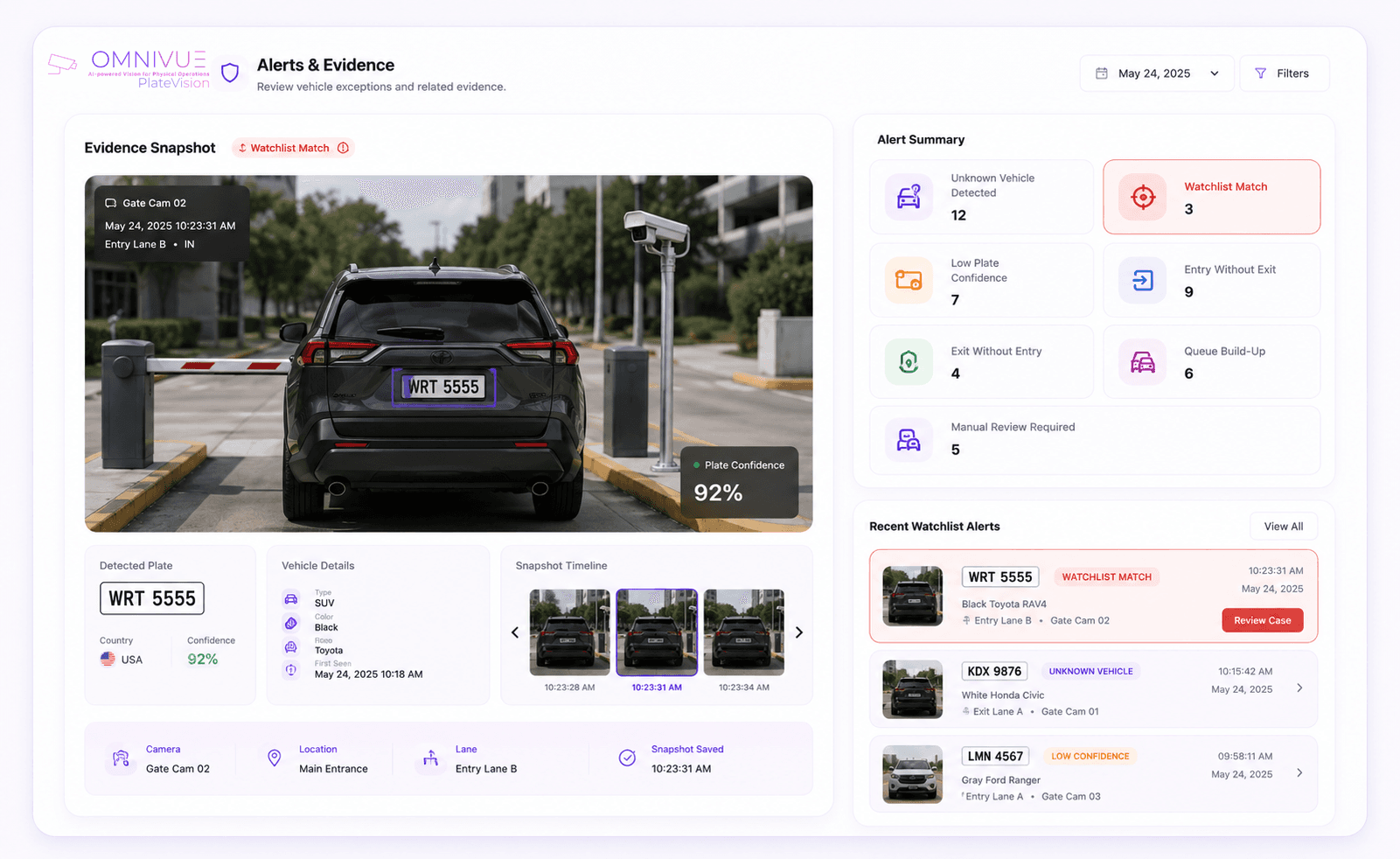
Residential communities
The primary benefits may be faster resident entry, visitor verification, improved vehicle records, reduced dependence on stickers and better handling of blocked or unknown vehicles.
Commercial buildings and campuses
The business case may focus on employee and tenant access, contractor schedules, visitor vehicles, parking allocation and reduced congestion during peak arrival periods.
Paid parking facilities
Revenue assurance, ticketless entry, payment reconciliation, subscription management and disputed-event evidence may produce the strongest return.
Warehouses and logistics sites
Vehicle identity, scheduled deliveries, gate processing time, yard entry records and exception control may matter more than parking revenue.
Hotels, hospitals and mixed-use developments
The workflow may need to account for guests, staff, valet operations, taxis, service vehicles, emergency access and multiple tariff or entitlement rules.
A Decision Framework for Buyers
- Define the operational problem before selecting the technology.
- Measure current vehicle volume, handling time, exception rate and leakage.
- Identify which cameras, barriers and systems can be reused.
- Map the complete workflow from plate capture to decision, action and evidence.
- Estimate benefits using conservative, expected and upside cases.
- Include integration, infrastructure and ongoing support in the total cost.
- Run a pilot using the same metrics used in the business case.
- Expand only after the workflow and exception process are stable.
From Plate Recognition to Parking Operations
ANPR is useful because it creates a consistent vehicle identity event. Parking automation creates value when that event is connected to permissions, payments, barriers, exceptions and evidence.
The strongest business cases are not built around a claimed recognition percentage. They are built around the cost of the current process, the value of the operational improvement and the reliability of the complete workflow under real conditions.
For some sites, the return will be primarily financial. For others, it will come from faster access, stronger control, better records and a more consistent experience for residents, employees, visitors and parking users.
The correct question is therefore not simply, "How accurately can the system read a plate?"
What measurable operational and financial result will the plate event enable?
ANPR and parking workflow review
Build a Practical ANPR and Parking Automation Business Case
Omnivue helps organizations evaluate vehicle-access and parking workflows using existing or purpose-selected cameras, site rules, barriers, event records and integration requirements. A workflow review can help determine which journeys to automate first, whether current infrastructure is suitable, which integrations are required, how exceptions should be handled and which pilot metrics should be measured.